
The Sense of Beauty: Six Centuries of Painting From Museo de Arte de Ponce
Exhibition at the Crocker Art Museum, Sacramento, California
February 1st – May 24th, 2026
The Crocker Art Museum in midtown Sacramento is an oasis amid the hustle and bustle of the city, offering a culturally rich, meditative space. Built in 1871, the Crocker is the oldest museum in the Western United States, and it boasts a collection that encompasses California, American, and European art.
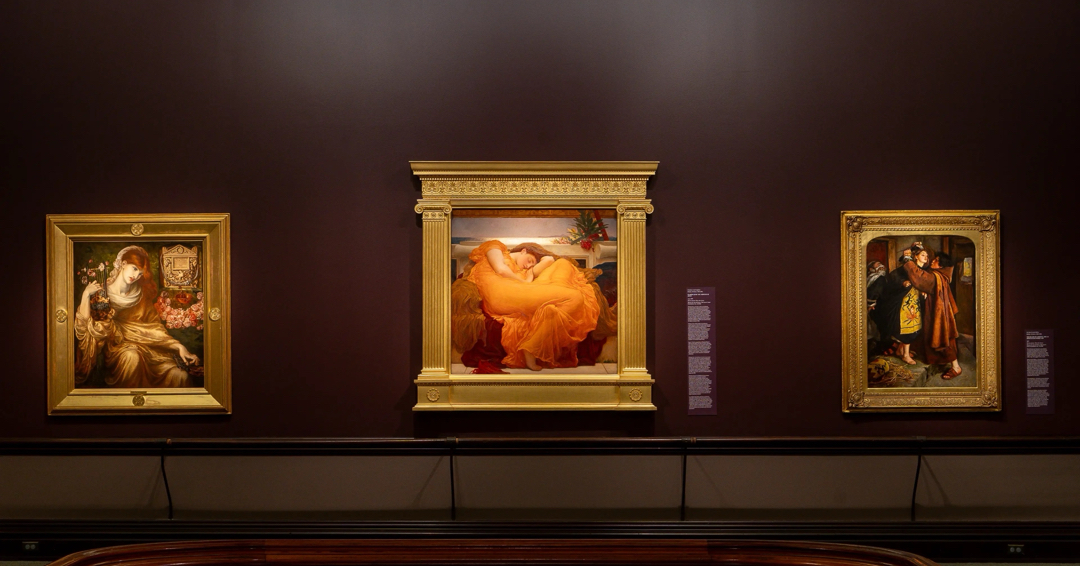
As soon as I stepped into the exhibition room that housed The Sense of Beauty: Six Centuries of Painting from the Museo de Arte de Ponce, with its softly lit, dark-wood interior, my attention was drawn to three Victorian masterworks arranged as a single visual statement. Frederic Leighton’s 1895 masterpiece, Flaming June, occupied the center position, flanked by Dante Gabriel Rossetti’s Roman Widow (1874) and John Everett Millais’s The Escape of a Heretic, 1559 (1856). Seeing these works hanging in one of the Crocker’s oldest galleries felt appropriate, as the museum’s historic architecture and subdued atmosphere seemed perfectly suited to the sensibilities of the paintings themselves.
Experiencing these masterworks in person, I found myself thinking not only about their beauty but about their place in the broader history of art. For much of the twentieth century, Victorian painting, particularly the work of the Pre-Raphaelites and artists associated with them, was dismissed or ignored. Today, that dismissal feels increasingly difficult to sustain. Standing before these paintings, it was impossible to ignore the level of technical mastery on display, from the precision of the drawing to the careful orchestration of composition, color, and narrative.
What struck me most was the significance of seeing these works together. Roman Widow and The Escape of a Heretic, 1559 were painted by two of the three founding members of the Pre-Raphaelite Brotherhood, while Flaming June represents the culmination of late Victorian classicism and remains one of the most recognizable paintings in the world. The opportunity to view works by Pre-Raphaelite and Victorian classicist artists was appealing in its own right, but as a working draughtsman, the chance to stand inches from these paintings and study their compositions firsthand was of profound importance. Together, these paintings revealed three distinct approaches to Victorian composition, from Leighton’s extraordinary stillness and containment to Millais’s gift for narrative, with Rossetti occupying a fascinating middle ground between the two.
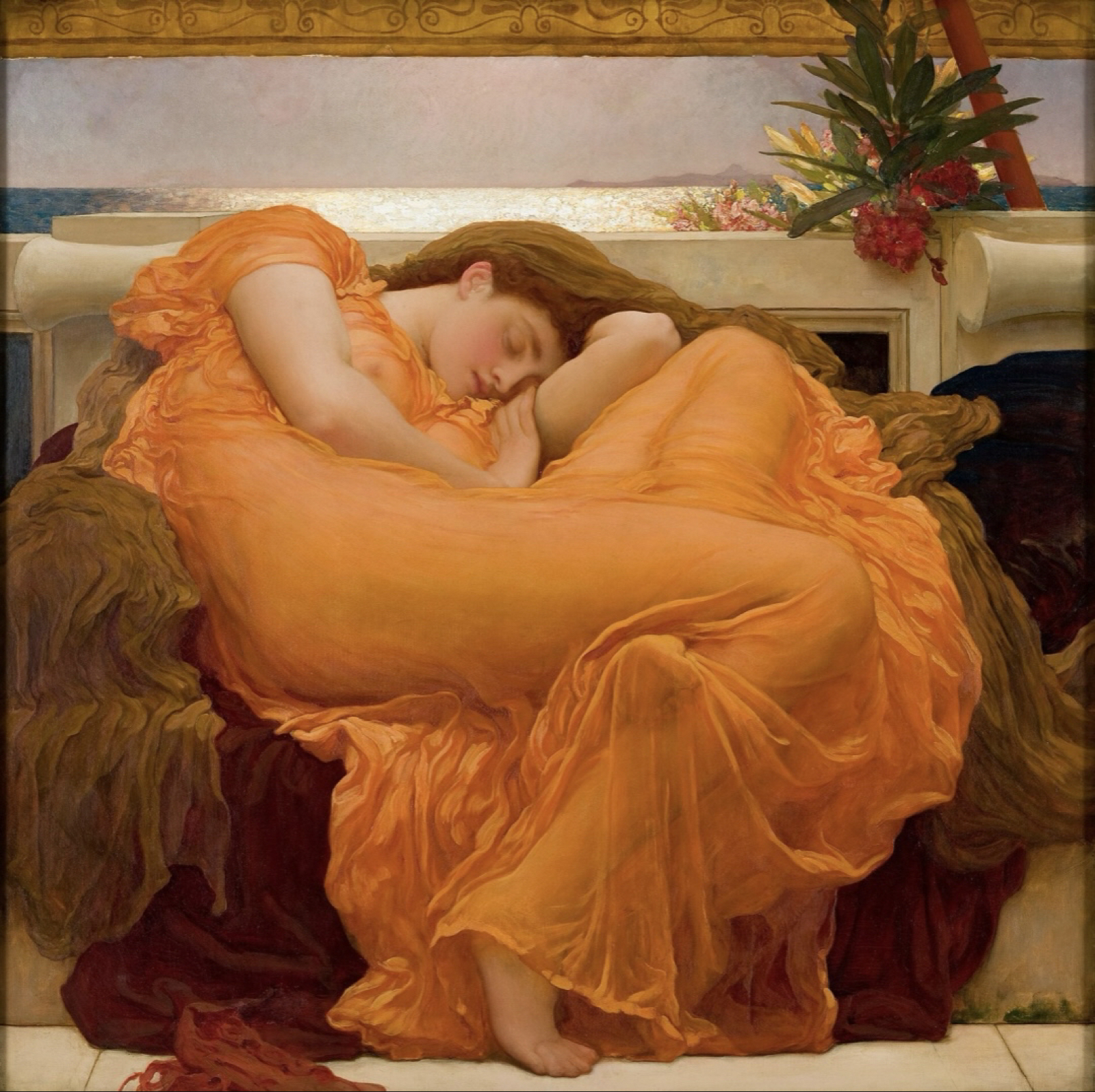
The scale of Flaming June immediately caught my attention. After decades of encountering the painting in books and reproductions, I expected something considerably larger. Instead, I found a work that occupies a surprisingly intimate space, inviting close examination and slow appreciation. Its composition, with its reclining figure wrapped in folds of radiant orange drapery, creates a powerful sense of stillness and containment. Rather than revealing itself all at once, the work rewards sustained looking. My eye moved from the figure’s face to the exposed curve of her foot, then outward toward the cool blue Mediterranean beyond the parapet before returning to the intricate folds of orange drapery that unify the composition.
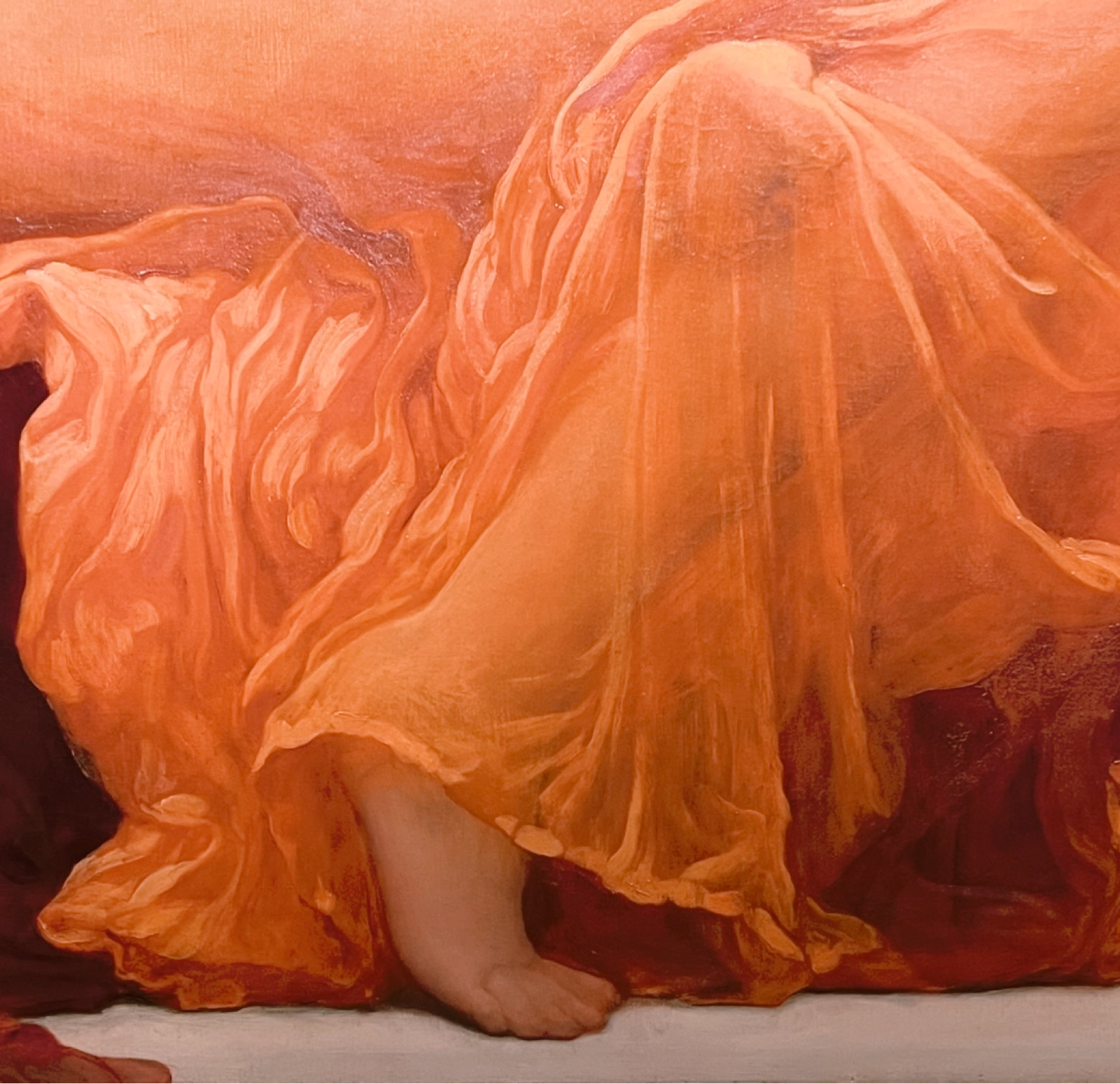
The delicate application of oil washes to build depth gave me insight into Leighton’s painstaking technique. Particularly striking was the finesse with which he rendered the figure’s diaphanous drapery, creating a convincing illusion of translucence in drapery on a human figure while preserving the weight and structure of the fabric beneath. Although I work in a different medium, I have wrestled with this same challenge in my own drawings. Seeing how successfully Leighton solved it gave me a renewed appreciation for both his technical mastery and the countless decisions hidden beneath its apparent effortlessness. What had always appeared beautiful in the pages of my books became something far more visceral and immediate in person.
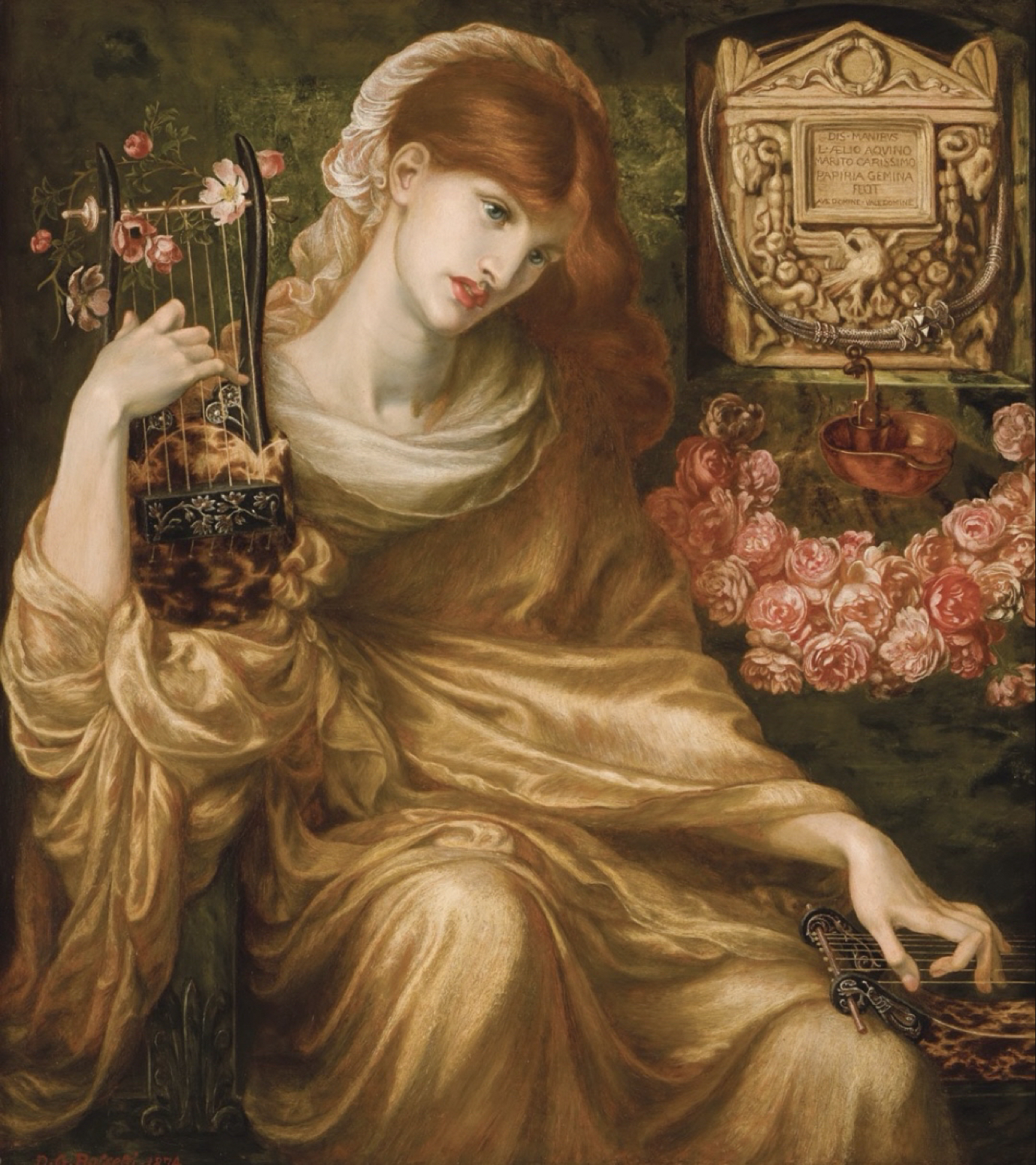
While Flaming June was the painting that initially drew me to this exhibition, seeing Dante Gabriel Rossetti’s Roman Widow proved equally rewarding. Despite never having seen it before, it was instantly recognizable. The languorous features of model Alexa Wilding and the picture’s tightly cropped composition recall other works such as Veronica Veronese (1872) and A Sea-Spell (1877). More importantly, the somnolent gaze, the abundance and rhythm of hair, the psychological interiority, and the overall mood belong to a visual language I was already deeply familiar with. The composition of Roman Widow may have been new to me, but its language was one I had internalized long ago.
Rossetti’s Roman Widow, also known as Dis Manibus, depicts a young woman seated in a sepulcher beside her late husband’s cinerary urn. Rossetti portrays stillness and emotional introspection through the picture’s tightly cropped composition and dark, somber background. Adding to the composition’s heaviness are the figure’s thick, luxuriant robes and the cascade of abundant red hair that frames Alexa Wilding’s face. Reinforcing the emotional atmosphere of the scene, Rossetti has included two small stringed instruments and clusters of pink roses, details that deepen the picture’s sense of mourning and loss. Unlike Leighton’s reclining figure, whose stillness exists largely outside of narrative, Rossetti’s widow carries an inner story with her. Yet rather than emphasizing action, the artist turns inward, allowing memory, grief, and devotion to become the true subject of the picture.
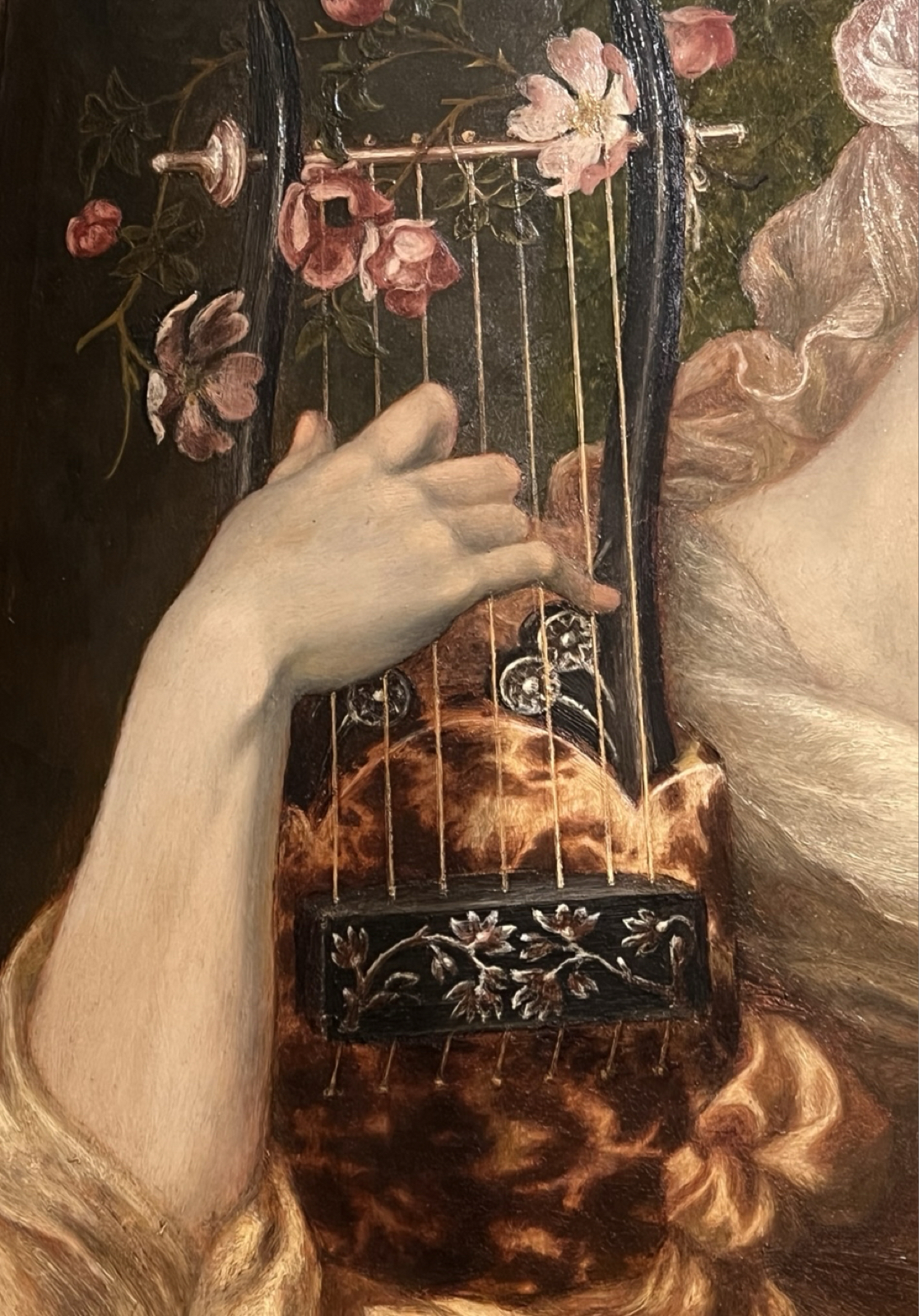
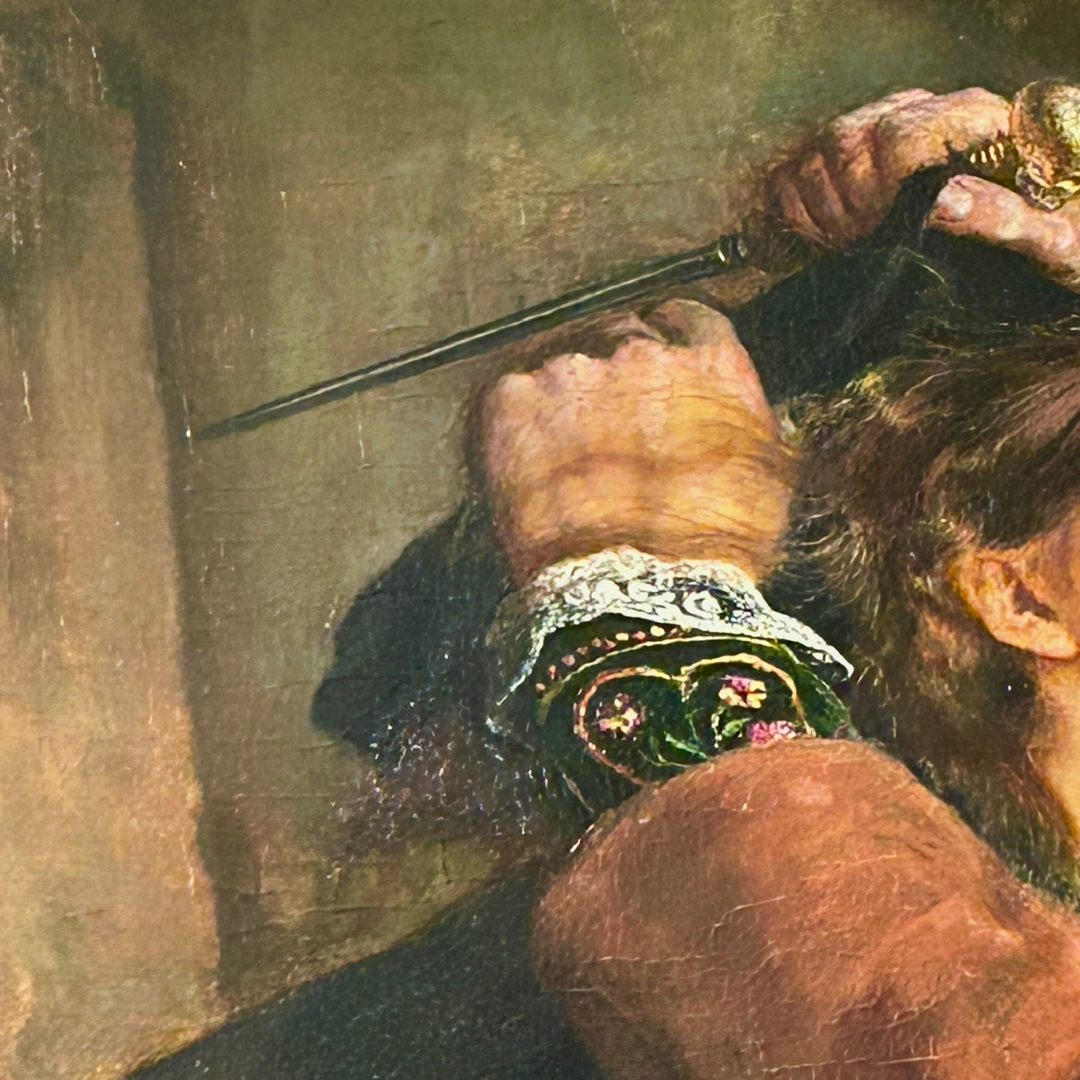
John Everett Millais’s The Escape of a Heretic, 1559 offered an altogether different viewing experience from Flaming June and Roman Widow. Whereas Leighton and Rossetti draw the viewer inward through stillness and psychological interiority, the appeal and intrigue of Millais’s picture rely almost entirely on storytelling. At first view, it’s easy to assume the woman in the picture is being attacked. However, after studying the painting more closely and reading the gallery label, I realized that Millais is actually depicting a man disguised as a friar rescuing a woman condemned as a heretic whom the Spanish Inquisition has imprisoned. Millais allows the rich, embroidered sleeve of the rescuer to emerge from the simple monk’s robes that make up his disguise, a subtle visual clue to the rescuer’s true identity that rewards careful observation and sustained viewing.
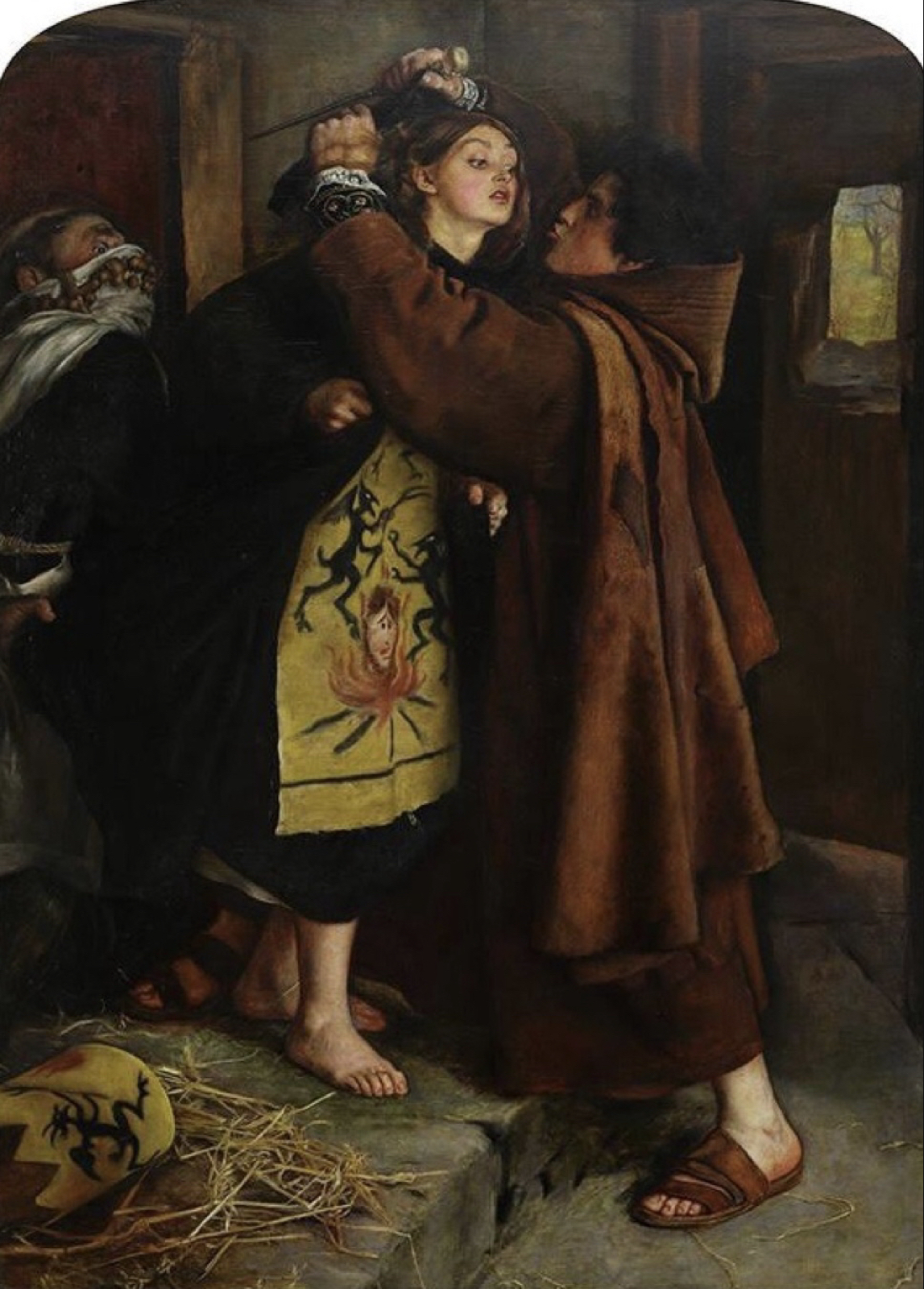
Once I understood the story Millais was telling, I began to notice how every compositional element serves that narrative. The rescuer’s outstretched arm, wrapped in thick robes, frames the woman’s face and immediately draws the viewer’s attention to her expression, making it the emotional focal point of the composition. Millais’s masterful staging places us in the midst of the unfolding drama, while his restrained palette of dark, earthy tones allows the figures and their gestures to dominate the composition. The result is a visceral sense of immediacy that reinforces the scene’s emotional intensity. As a working draughtsman, I find lessons like these invaluable as I continue to explore how storytelling can be incorporated into my own work without sacrificing the qualities that distinguish fine art from illustration.
Standing before these three paintings reinforced something I have been grappling with in my own artistic practice: stillness and observation in the age of rapid consumption. Flaming June, Roman Widow, and Escape of a Heretic, 1559, are not meant to be consumed; they’re meant to be entered and explored. Frederic Leighton, Dante Gabriel Rossetti, and John Everett Millais created compositions that reward patience, luring us into rich, atmospheric worlds that continue to reveal themselves through sustained observation. These evocative scenes challenge the way we view art in 2026, reminding us that the richest rewards still belong to those willing to slow down and give a work of art the time it deserves.
A shortened version of this essay appears in the Pre-Raphaelite Society US newsletter, Issue 72, summer 2026.
Installation views and detail photographs by Salvador Castío and Allyce Castillo, unless otherwise noted.