Back On The Edge

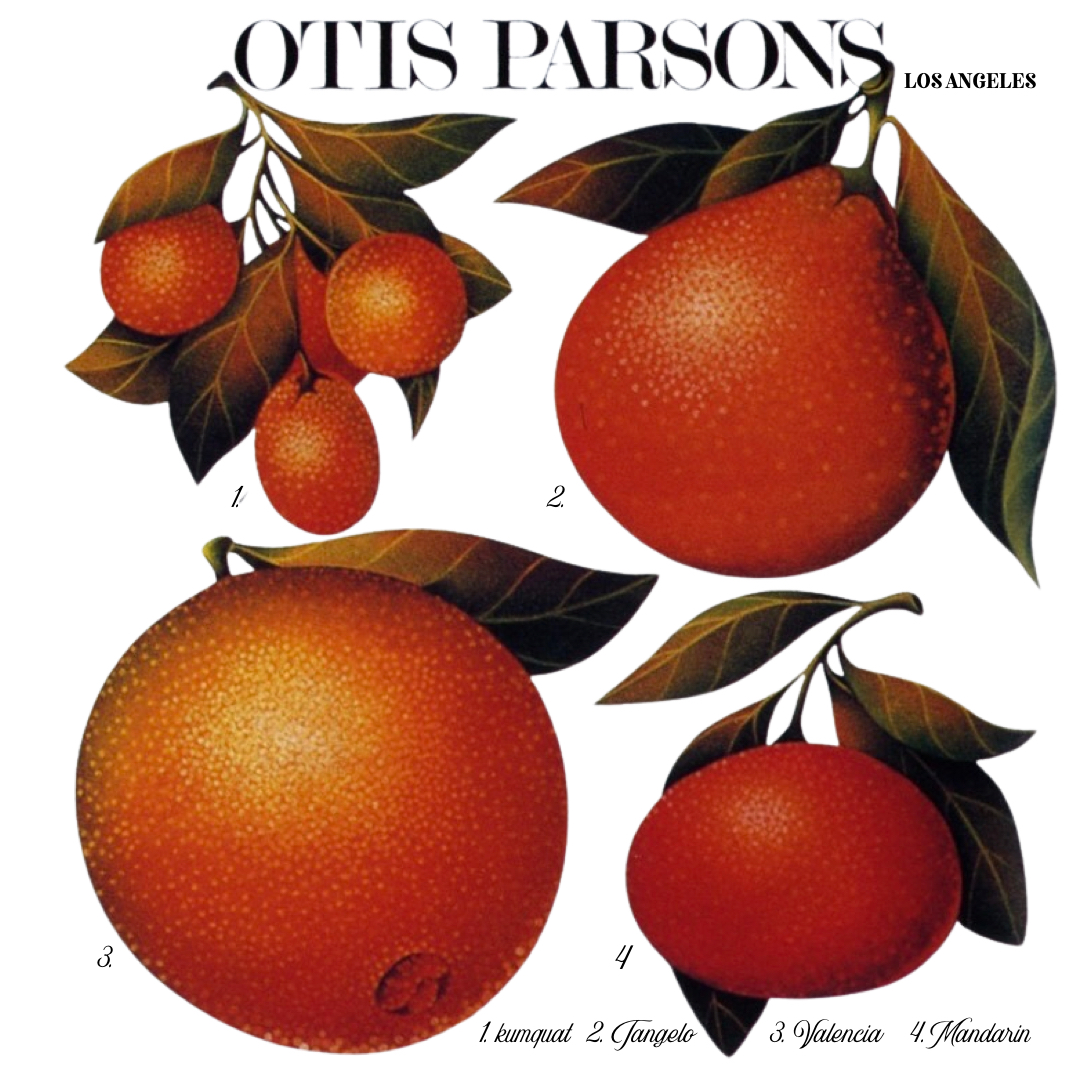
Otis Parsons 1985 Catalog

Forty years ago, I stood on the edge of the most significant chapter of my young life—preparing to move to Los Angeles to attend Otis Art Institute of Parsons School of Design. I was nineteen—naïve, brimming with piss and vinegar—and hell-bent on getting into Parsons’ exchange program so I could study at the American College in Paris. My nerves were on fire, but I knew this was the step I had to take. Even then, before I could name it, I carried the same thing I carry now: the unshakable belief that world-class was the only option.

Not everything went as planned—when Parsons didn’t work out, I headed to San Francisco the following year to attend the Academy of Art College, where I completed my education in 1992. Despite the passage of time, my obstinance and resolve haven’t faded. Today, I’m back on that edge—older, sharper, and feeling the same electric hum under my skin.

Academy of Art Logo

That edge I’m standing on now has a name: Drawing the Pre-Raphaelites, a five-page article in the summer 2025 issue of the Pre-Raphaelite Society’s journal, the PRS Review. It’s a milestone that reaches straight back to that nineteen-year-old in Los Angeles, chasing a vision. This article is more than recognition—it’s an ode to the resolve and defiance that have carried me through every hurdle since 1985, and a tribute to my unwavering conviction. Being recognized by the Society feels like coming full circle while still stepping forward.

In those five pages, I share my journey with the Pre-Raphaelites: how it began, the influences that shaped it, and why I work the way I do. It’s a look into the process, the persistence, and the vision I’ve chased for decades. For me, it’s not just about embracing a Pre-Raphaelite aesthetic—it’s about bringing my vision to fruition, giving my authentic voice its place, and expressing a global point of view. Following the example of my hero, Sir Edward Burne-Jones, and his brother-in-arms, designer William Morris, I push back against the status quo through beauty and reason.

Summer 2025 PRS Review

The Pre-Raphaelite Society was founded in October 1988 by the Provost of Birmingham Cathedral, the late very reverend Berry, M.A.

The aims of the Pre-Raphaelite Society are:

“To promote the study of the works and lives of, and also to promote the wider appreciation of, the Pre-Raphaelite Brotherhood and their successorslocally, nationally and internationally; to publish, or encourage publication of, writings relating to the Pre-Raphaelite Brotherhoodand their successors; to hold meetings, confrences and seminarsof members and others who have an interestin the Pre-Raphaelite Brotherhood and their successors and to arrange visits to places of local, national and international interest; and to co-operate with other societies with similar objectives.”

For further information, visit the Pre-Raphaelite Society’s website by clicking here

Vision and Beauty: Part 3

A Vision Fulfilled

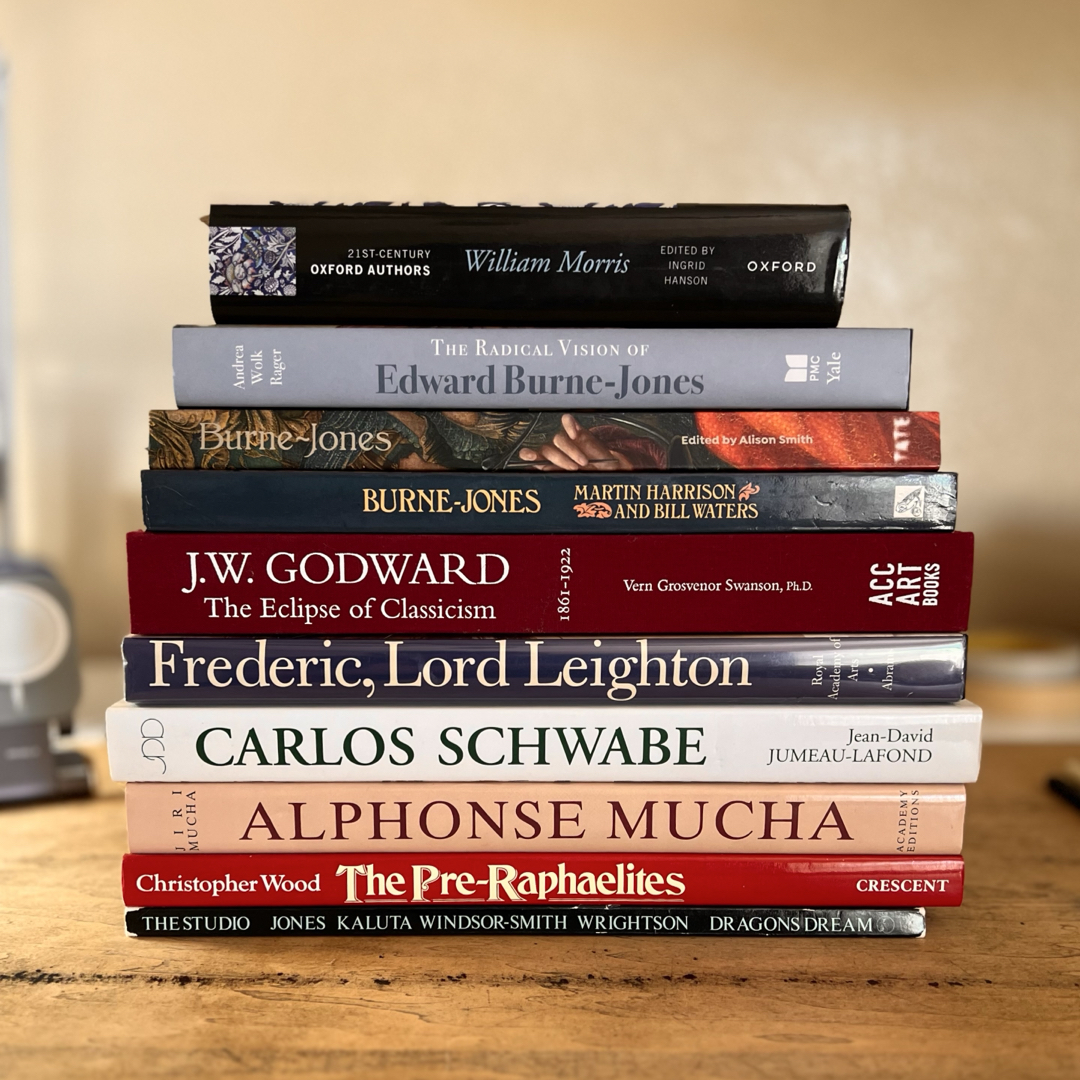
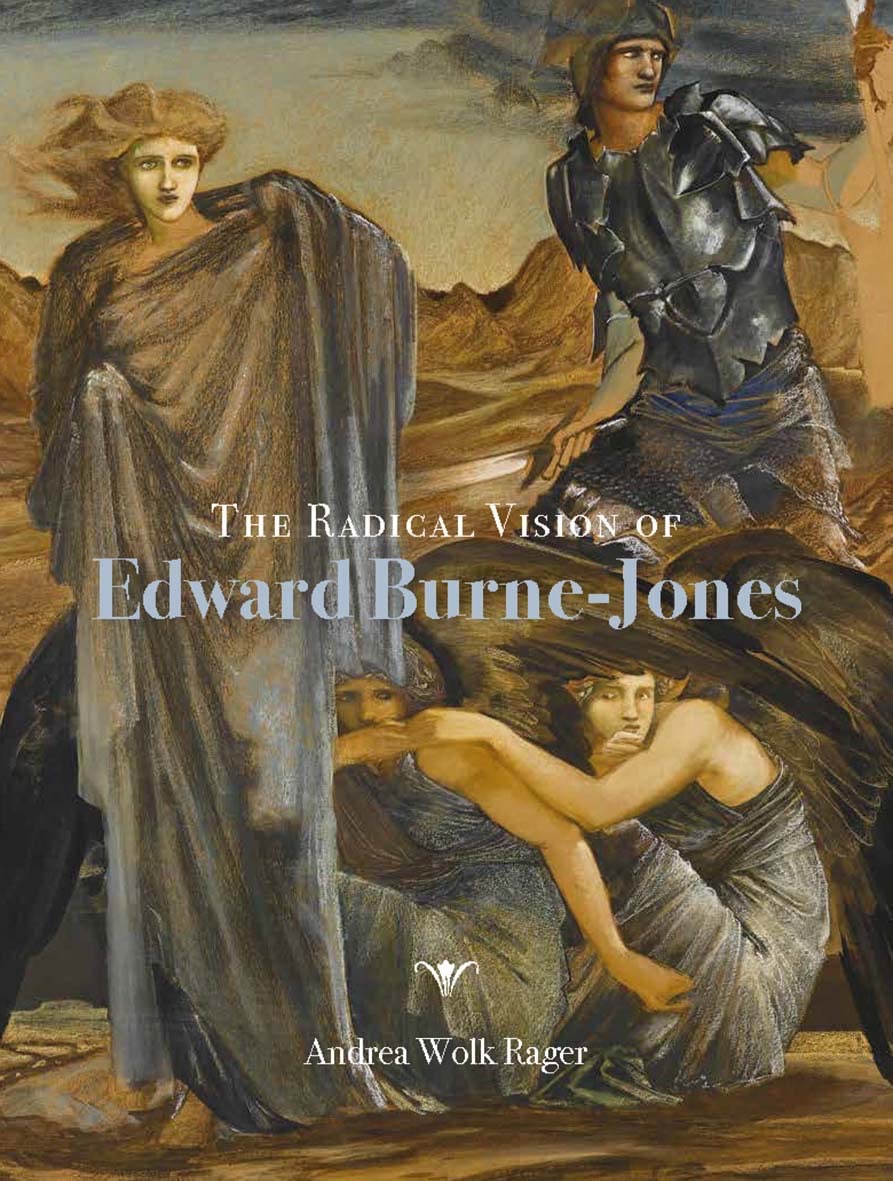
In the summer of 2022, I experienced a fundamental change. Reading The Radical Vision of Edward Burne-Jones finally gave me the clarity and purpose I had been searching for. Inspired by Andrea Wolk Rager’s brilliant reevaluation of Burne-Jones’s oeuvre, I made the decision I had delayed for years: to fully embrace the Pre-Raphaelite aesthetic that had enthralled me for years.

My commitment wasn’t limited to the Brotherhood alone. I also drew inspiration from the artists and designers of the fin de siècle and the Symbolists, who carried the Pre-Raphaelites’ ideals forward. I understood this was a significant moment — the turning point I had been working toward. And yet, as always, I knew that developing my vision, grounded in these traditions, would take time.

The Radical Vision of Edward Burne-Jones

Caught up in the momentum of that decision, I created my first work, Entre Sombras, in what I now recognize as my mature style. Inspired by a portrait of Maria Zambaco by Burne-Jones, Entre Sombras was the first step — a proclamation in pen and ink: this is who I am.

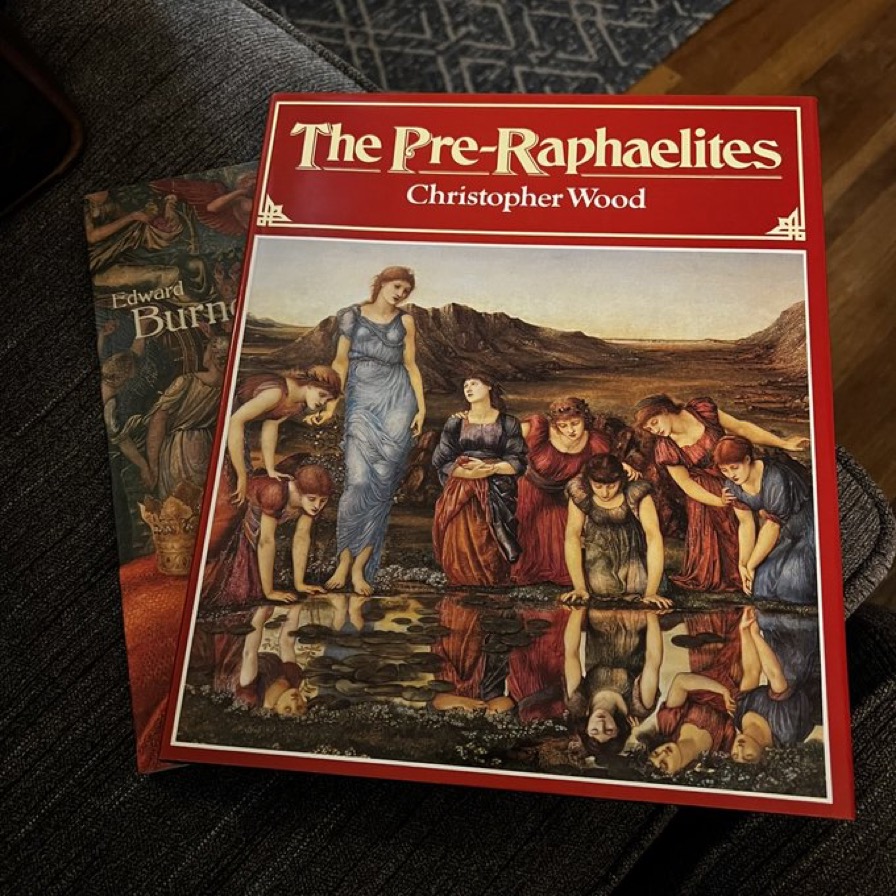
Entre Sombras was not just a drawing. Much like Christopher Wood’s book The Pre-Raphaelites, which had set me on this path all those years ago, it was a sign in the road — a moment when I could finally say: I had arrived at the work I had always sought to create.

Since then, every piece I’ve made has carried forward that same intention: to use the visual language of the Pre-Raphaelites to explore my interests through a contemporary lens, and to do so with the level of care and mastery their legacy demands. The vision I had at eighteen has gone beyond influence; it’s become my identity. Now, that journey has brought me to a new milestone.

The best is yet to come.


Vision and Beauty: Part 2

The Search for Direction

     In 2015, I found myself at a crossroads. I was frustrated with the direction of my work — or, more accurately, the lack of one. What I was producing fell far below the standard I hold myself to. Worse, it said nothing about me. Something had to change.

     That change began with honest soul-searching. I needed a direction that aligned with my deepest aspirations — and allowed my authentic voice to emerge. I recalled my visit to Tate Britain in London, a decade earlier, standing before Burne-Jones’s King Cophetua And The Beggar Maid, and instinctively turned back to the book that had changed everything for me. ChristoWood’s The Pre-Raphaelites still held the answer I was searching for. I saw it clearly within its pages: the aesthetic I had long admired wasn’t something to study from a distance. It was the path I needed to walk.

     The time had come to stop waiting and start working toward embracing the Pre-Raphaelite aesthetic that had obsessed me for three decades. I knew it wouldn’t happen overnight, but I felt sure I was moving in the right direction for the first time in years.

     Over the next several years, I returned to the source, reacquainting myself with the Brotherhood’s origins and aims. I studied their work with new eyes. Slowly, I reached creative plateaus — real progress, not just repetition. For the first time, I could see that the work I wanted to create was possible.

     Then, in the summer of 2022, everything changed. I began reading Andrea Wolk Rager’s The Radical Vision of Edward Burne-Jones. Dr. Rager’s work provided what I’d been searching for all along: a blueprint. Her scholarship revealed that Burne-Jones’s aesthetic was never merely escapist eye candy. It was a vehicle for critique — a way to address environmental destruction, inequality, and capitalist consumerism through beauty.

Her book opened the door to the next phase of my journey.

Next: From Obsession to Practice

Vision and Beauty: Part 1

A Vision of Beauty: Discovering The Pre-Raphaelites

I had no idea I was stepping onto a forty-year path when I bought my copy of the illustration monograph The Studio at sixteen. That oversized tome felt like a sign on the road. While I admired all four of the artists featured, it was Barry Windsor-Smith’s Pre-Raphaelite-inspired work that caught my eye. His aesthetic was entirely new to me, as were the names he cited as influences: Dante Gabriel Rossetti, William Holman Hunt, John Everett Millais, Lord Leighton, and Edward Burne-Jones. I needed to know more.

When speaking about the moment that changed his life, Burne-Jones recalled the epiphany he experienced inside Beauvais Cathedral while traveling with William Morris through Northern France. In that singular moment, he knew his life’s direction. When I discovered Christopher Wood’s seminal book in 1984, I experienced a similar awakening. Its cover illustration — Burne-Jones’s The Mirror of Venus— enthralled me from first glance. That book expanded my limited understanding of what art could be, showing me the possibilities that open when you aspire to a higher purpose.

Beyond introducing me to the core members of the Pre-Raphaelite Brotherhood and their followers, it led me to the artist who would become my guiding light: Edward Burne-Jones. My encounter with that book at eighteen planted a seed that would grow and mature over the next four decades. Despite all the ups and downs I have seen, the impression that book made on me has never faded. It’s never been far from me — always within arm’s reach. And it continues to inspire me. In those early years, I had no idea what the Pre-Raphaelites would ultimately mean in my life. But the path had begun.

Next: A Search for Direction; How The Pre-Raphaelites Saved My Work


The Big Sky


And if I only could

I’d make a deal with God

And I’d get him to swap our places

Be running  up that road

Be running  up that hill

Over the last few months, the music of one of my artist-heroes, Kate Bush, has been in the zeitgeist. Her song, Running Up That Hill (A Deal With God), from her classic album, Hounds Of Love, has had a massive resurgence and been introduced to a whole new generation of fans thanks to the show Stranger Things. 

     Kate and her brilliant work have been a part of my life for nearly forty years. It seems fitting that one of the artists I admire most is in the public eye now. I first discovered Kate in 1985 when Running Up That Hill was released. Its immediate impact piqued my interest, leading me to purchase her next release, The Whole Story, her greatest hits compilationwhich was nothing short of epiphanic. 

     Over the last few months, I have been somewhat absent from social media. That absence has been intentional. I have spent my time indulging in things that nourish me creatively, such as revisiting favorite albums, watching documentaries, and reading as much as possible. I have spent most of my time quietly working on pictures I have wanted to make for myself. I have zero interest in sharing what I have been doing on social media or with anyone. It’s up to me to share my efforts ― or not. The work I have been doing is solely for myself and no one else. The only goal that I have had during this time is to create work that matters to me. People notice when you do work whose only goal is to satisfy your artistic goals. Doing work solely to please myself is the only way possible for me. There’s no point in creating things that don’t matter to me or satisfy me. Ultimately, whatever I do has to fulfill me.  

     I have long admired and respected Kate Bush for this very reason. She’s done things her way from the beginning, and her work has been brilliant. If there’s one thing I’ve learned from Kate, it has always been to do things your way without compromise.

     Kate and her work have been a part of my personal soundtrack ever since my formative years in the 80s when I went from being a beginner with nothing but a burning desire to make art and loads of talent to an art student. First in Los Angeles at Otis-Parsons, then in San Francisco at The Academy Of Art College. My college years were a supernova of people, places, culture, and remarkable artistic growth. Throughout those life-changing years, Kate’s music continued to challenge and amaze me. The Whole Story introduced me to Celtic folk music, The Sensual World introduced me to Bulgarian singing, and The Red Shoes furthered my exposure to Celtic music while also exposing me to the Madagascan valiha. This incredible exposure happened alongside my artistic skill’s growth and refinement. 

     Eventually, all this led to where I find myself at this very moment. Last weekend, I decided to give my followers on Facebook and Instagram a sample of some of the work I’ve been doing over the past year, and the response was fantastic. Between likes, comments, and reshares, total engagements were just over 200. It was clear that people were responding so strongly because they could see the decades of sweat and effort that I’ve dedicated to my work. They saw something genuine, and they responded. I couldn’t ask for more.

     My picture of Kate for this week’s post is taken directly from my sketchbook. Her song, The Big Sky, from Hounds Of Love, is the inspiration. I have always loved the song’s meteorological-based lyrics ― cloudy, overcast days are magical and forever inspiring. Best of all is the song’s title; it best reflects my ambition.

I’m looking at the big sky.