
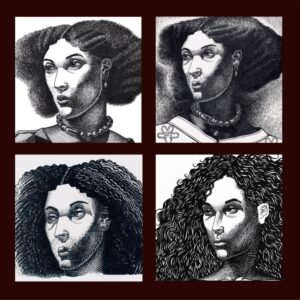
In February 2025, Dr. Zaynub Zaman, editor of the Pre-Raphaelite Society’s journal, the PRS Review, invited me to inaugurate a new series, In an Artist’s Studio, focusing on the creative process behind new work. Her gracious offer came at a crucial point in my development.
Three years earlier, I had found myself at a creative crossroads and decided to take a risk: to fully embrace the aesthetic of the Pre-Raphaelites and the artists and designers of the fin de siècle, something that had enthralled me for nearly four decades. My first piece reflecting that decision was Entre Sombras. That shift eventually led to “Drawing the Pre-Raphaelites,” a six-page article published in the summer 2025 issue of the PRS Review. The article became a turning point for me, allowing me not only to share my history with the Pre-Raphaelites, but to show their influence on my work to an international audience.
Along with the essay, I included Entre Sombras and several new drawings, among them a portrait of the model Fanny Eaton, whose name was new to me. Of the four drawings that appeared in “Drawing the Pre-Raphaelites,” it was Fanny’s portrait that intrigued me most. After four decades of studying the Pre-Raphaelites and becoming familiar with faces such as Jane Morris and Maria Zambaco, I had suddenly encountered a face that felt different.
From the get-go, I was intrigued by the change Fanny represented and, more importantly, by the possibilities she opened up for reimagining Pre-Raphaelitism in 2026 and for the evolution of my own work.
Initially, I was content with my interpretation of Walter Fryer Stocks’ chalk portrait of Fanny. Beyond its craftsmanship, it spoke to the diversity that had been part of Pre-Raphaelitism from the beginning and, more importantly, to the transformation possible in my own work. As the months passed after my article’s publication, I felt more strongly about the possibilities my drawing of Fanny suggested. To explore them, I would have to reimagine Fanny.
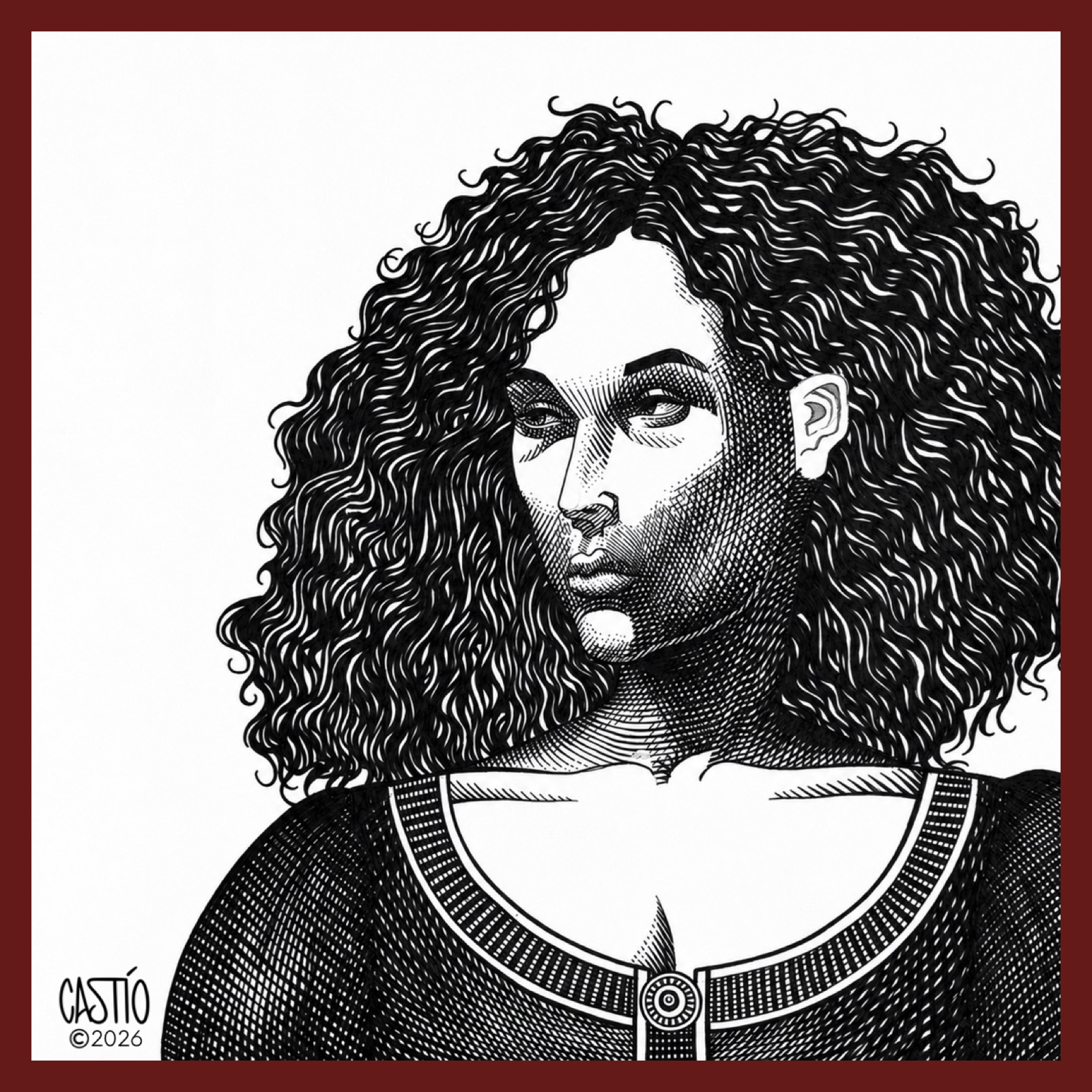
Walter Fryer Stocks’ portrait is a wonderful tribute to Fanny for its time, but what I imagined was something decidedly modern and very different. As I began to reimagine her, I knew that I had no interest in drawing another portrait or in telling a story. Instead, I wanted to push the boundaries of my drawing beyond portraiture and find something more personal by exploring stillness and psychological atmosphere.
As a working draughtsman influenced by such a rich and varied tradition, I feel the worst thing I could do is keep it from becoming something fresh and relevant to modern eyes. Over the past few years, my reading has shown me that people like William Morris and Edward Burne-Jones also looked toward the future and questioned the effects of environmental destruction, economic inequality, and capitalist consumption. Morris’s devotion to craftsmanship and exacting standards flies in the face of the digital and AI-generated images that inundate us in the 21st century. Likewise, Burne-Jones’s King Cophetua and the Beggar Maid offers a brilliant example of social commentary on issues of wealth and class that remain alive and well in our own time, while the psychological atmosphere and stillness of The Mirror of Venus offer something equally relevant: an experience of sustained looking that resists our culture’s demand for constant consumption.
Much like my image of Fanny Eaton, my work is also undergoing a transformation. The decision I made in the summer of 2022 to embrace the Pre-Raphaelite aesthetic that has enthralled me for forty years marked the beginning of that change. So many of the things I once valued in my work have fallen by the wayside since then. Now, the only thing that matters is being true to my vision and standards. William Morris and Burne-Jones have set the standard for me in terms of craft and point of view. I find it impossible to look at what they did and not feel compelled to follow a similar path. Their vision of beauty, craft, and conscience resonates deeply and has taught me that beauty can be both ornament and epiphany. The tradition I have chosen to follow is alive and continues to be a guiding light for me amid the challenges of the troubled times in which we live.