
Back On The Edge

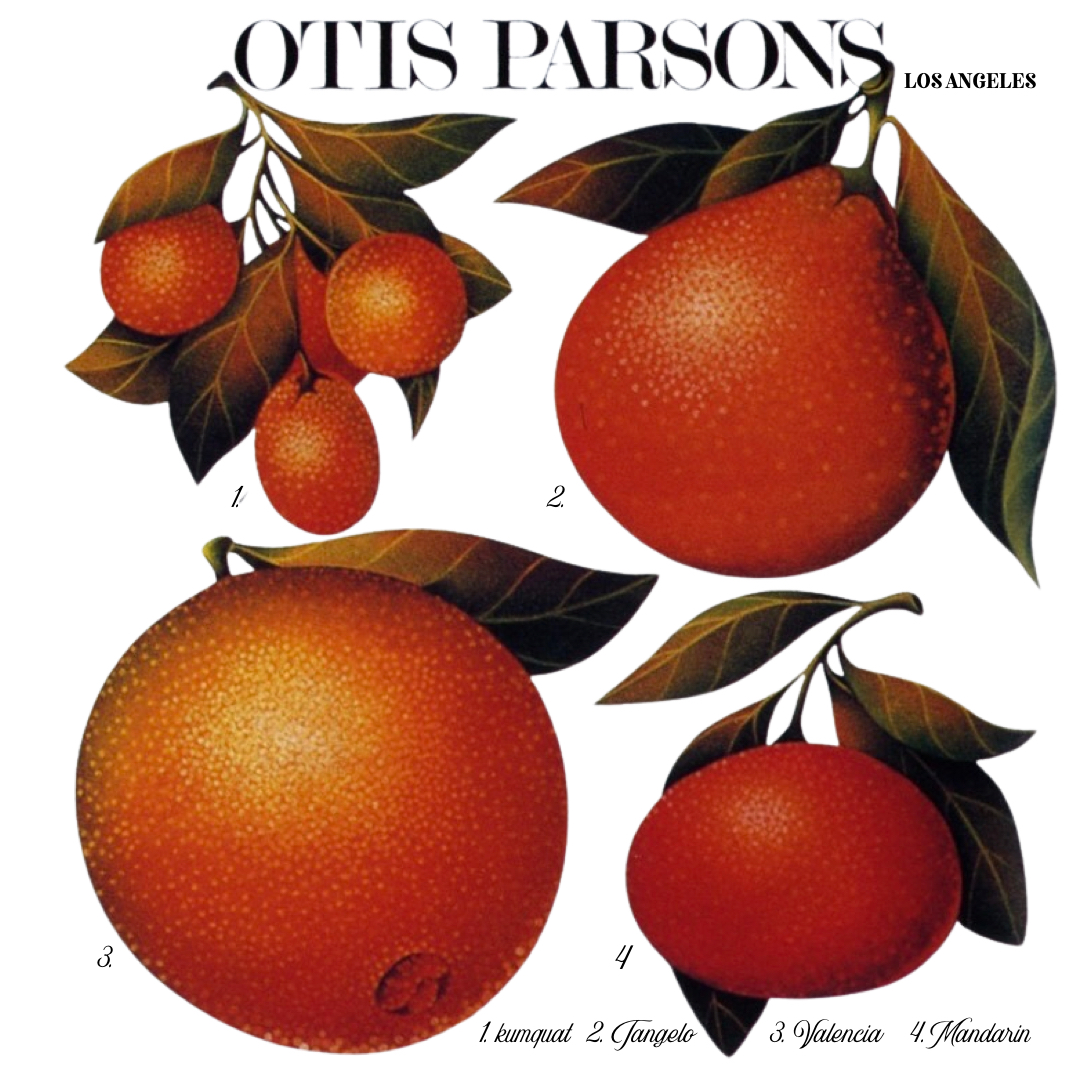
Otis Parsons 1985 Catalog

Forty years ago, I stood on the edge of the most significant chapter of my young life—preparing to move to Los Angeles to attend Otis Art Institute of Parsons School of Design. I was nineteen—naïve, brimming with piss and vinegar—and hell-bent on getting into Parsons’ exchange program so I could study at the American College in Paris. My nerves were on fire, but I knew this was the step I had to take. Even then, before I could name it, I carried the same thing I carry now: the unshakable belief that world-class was the only option.

Not everything went as planned—when Parsons didn’t work out, I headed to San Francisco the following year to attend the Academy of Art College, where I completed my education in 1992. Despite the passage of time, my obstinance and resolve haven’t faded. Today, I’m back on that edge—older, sharper, and feeling the same electric hum under my skin.
Academy of Art Logo

That edge I’m standing on now has a name: Drawing the Pre-Raphaelites, a five-page article in the summer 2025 issue of the Pre-Raphaelite Society’s journal, the PRS Review. It’s a milestone that reaches straight back to that nineteen-year-old in Los Angeles, chasing a vision. This article is more than recognition—it’s an ode to the resolve and defiance that have carried me through every hurdle since 1985, and a tribute to my unwavering conviction. Being recognized by the Society feels like coming full circle while still stepping forward.

In those five pages, I share my journey with the Pre-Raphaelites: how it began, the influences that shaped it, and why I work the way I do. It’s a look into the process, the persistence, and the vision I’ve chased for decades. For me, it’s not just about embracing a Pre-Raphaelite aesthetic—it’s about bringing my vision to fruition, giving my authentic voice its place, and expressing a global point of view. Following the example of my hero, Sir Edward Burne-Jones, and his brother-in-arms, designer William Morris, I push back against the status quo through beauty and reason.
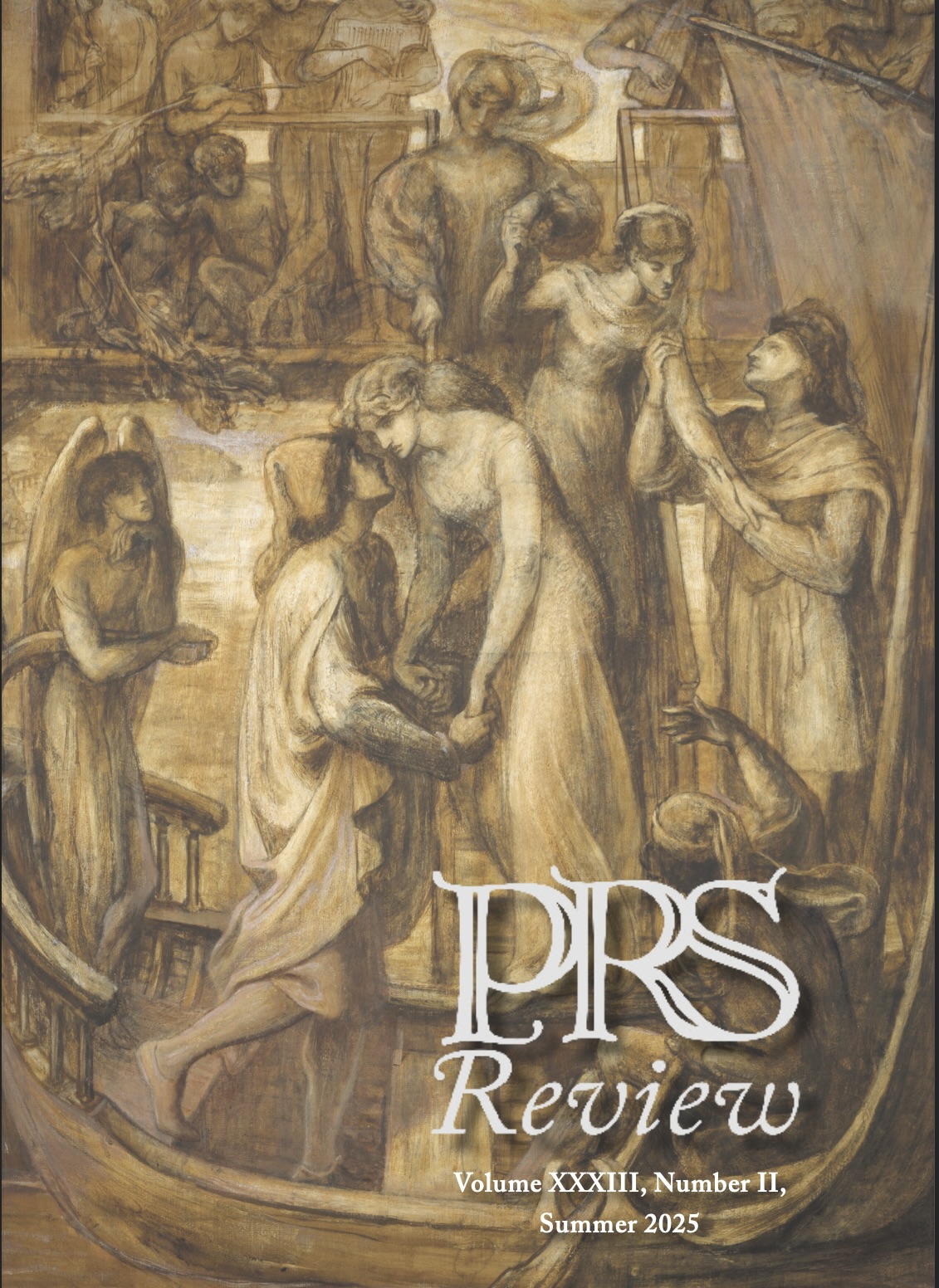
Summer 2025 PRS Review

The Pre-Raphaelite Society was founded in October 1988 by the Provost of Birmingham Cathedral, the late very reverend Berry, M.A.

The aims of the Pre-Raphaelite Society are:

“To promote the study of the works and lives of, and also to promote the wider appreciation of, the Pre-Raphaelite Brotherhood and their successorslocally, nationally and internationally; to publish, or encourage publication of, writings relating to the Pre-Raphaelite Brotherhoodand their successors; to hold meetings, confrences and seminarsof members and others who have an interestin the Pre-Raphaelite Brotherhood and their successors and to arrange visits to places of local, national and international interest; and to co-operate with other societies with similar objectives.”

For further information, visit the Pre-Raphaelite Society’s website by clicking here
Vision and Beauty: Part 1

A Vision of Beauty: Discovering The Pre-Raphaelites

I had no idea I was stepping onto a forty-year path when I bought my copy of the illustration monograph The Studio at sixteen. That oversized tome felt like a sign on the road. While I admired all four of the artists featured, it was Barry Windsor-Smith’s Pre-Raphaelite-inspired work that caught my eye. His aesthetic was entirely new to me, as were the names he cited as influences: Dante Gabriel Rossetti, William Holman Hunt, John Everett Millais, Lord Leighton, and Edward Burne-Jones. I needed to know more.

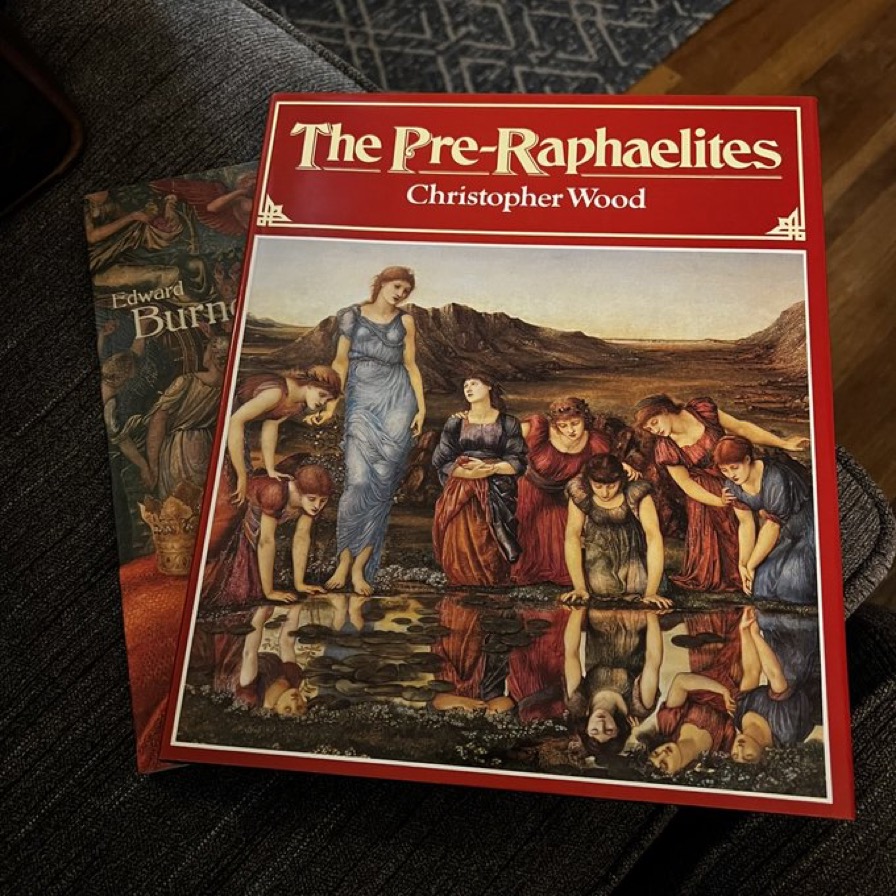
When speaking about the moment that changed his life, Burne-Jones recalled the epiphany he experienced inside Beauvais Cathedral while traveling with William Morris through Northern France. In that singular moment, he knew his life’s direction. When I discovered Christopher Wood’s seminal book in 1984, I experienced a similar awakening. Its cover illustration — Burne-Jones’s The Mirror of Venus— enthralled me from first glance. That book expanded my limited understanding of what art could be, showing me the possibilities that open when you aspire to a higher purpose.

Beyond introducing me to the core members of the Pre-Raphaelite Brotherhood and their followers, it led me to the artist who would become my guiding light: Edward Burne-Jones. My encounter with that book at eighteen planted a seed that would grow and mature over the next four decades. Despite all the ups and downs I have seen, the impression that book made on me has never faded. It’s never been far from me — always within arm’s reach. And it continues to inspire me. In those early years, I had no idea what the Pre-Raphaelites would ultimately mean in my life. But the path had begun.

Next: A Search for Direction; How The Pre-Raphaelites Saved My Work


Voices Not Forgotten

The world seems crueler in 2019. It’s not really any worse, but it feels like it is. With the advent of the internet and social media, we are all now hyper-aware of all the bad things that happen in our world. The days of hearing only vague details about something happening in another part of the world on the nightly news are gone. Daily, we now get blow-by-blow, live on-the-spot, in-your-face reports about all manner of atrocities that are happening in any part of the world at any given time. 

As time has passed, I have felt an increasingly strong need to use my work to give voices that have gone silent a chance to be heard anew. Every day, there are atrocities committed all over the world that leave me speechless. Last week, it was another mass shooting at a high school in Southern California where more innocent people died, and yesterday and today, it was Fresno and Oklahoma. Tomorrow it’ll be somewhere else, and it’ll happen to people that you are currently completely unaware of. You will learn the names of these innocent souls because their lives will have come to a sudden and unjust end. You might not personally know these people who are lost to senseless violence, but that doesn’t mean they’re unimportant. The names of the innocent deserve to be heard. Their lives deserve to be remembered.

One such person that I recently found out about is 14-year-old Ana Kriégel of Dublin, Ireland. Here’s a bit of Ana’s story from Wikipedia: “Anastasia “Ana” Kriégel (18 February 2004 – 14 May 2018) was a Russian-Irish girl who was subject to a violent attack, murdered and sexually assaulted in an abandoned house in late May 2018 in Lucan near Dublin. Ana was brutally murdered in May 2018 by two 13-year-old boys who lured her to a derelict farmhouse outside the city. Two boys, known only as Boy A and Boy B, who were 13 years old at the time of Kriégel’s death, were convicted of her murder, with one of the boys (Boy A) being further convicted of aggravated sexual assault. The two convicts are the youngest in the history of Ireland to be charged with murder.” 

Ana’s death was a senseless, cold-blooded murder. There are no words for this act of pure evil. Just like so many other victims of violent crime, Ana’s name deserves to be remembered. As an artist, I feel that it’s important for me to share these stories. It’s the least that I can do. I hope that my drawing has done Ana justice.