Drawing The Pre-Raphaelites

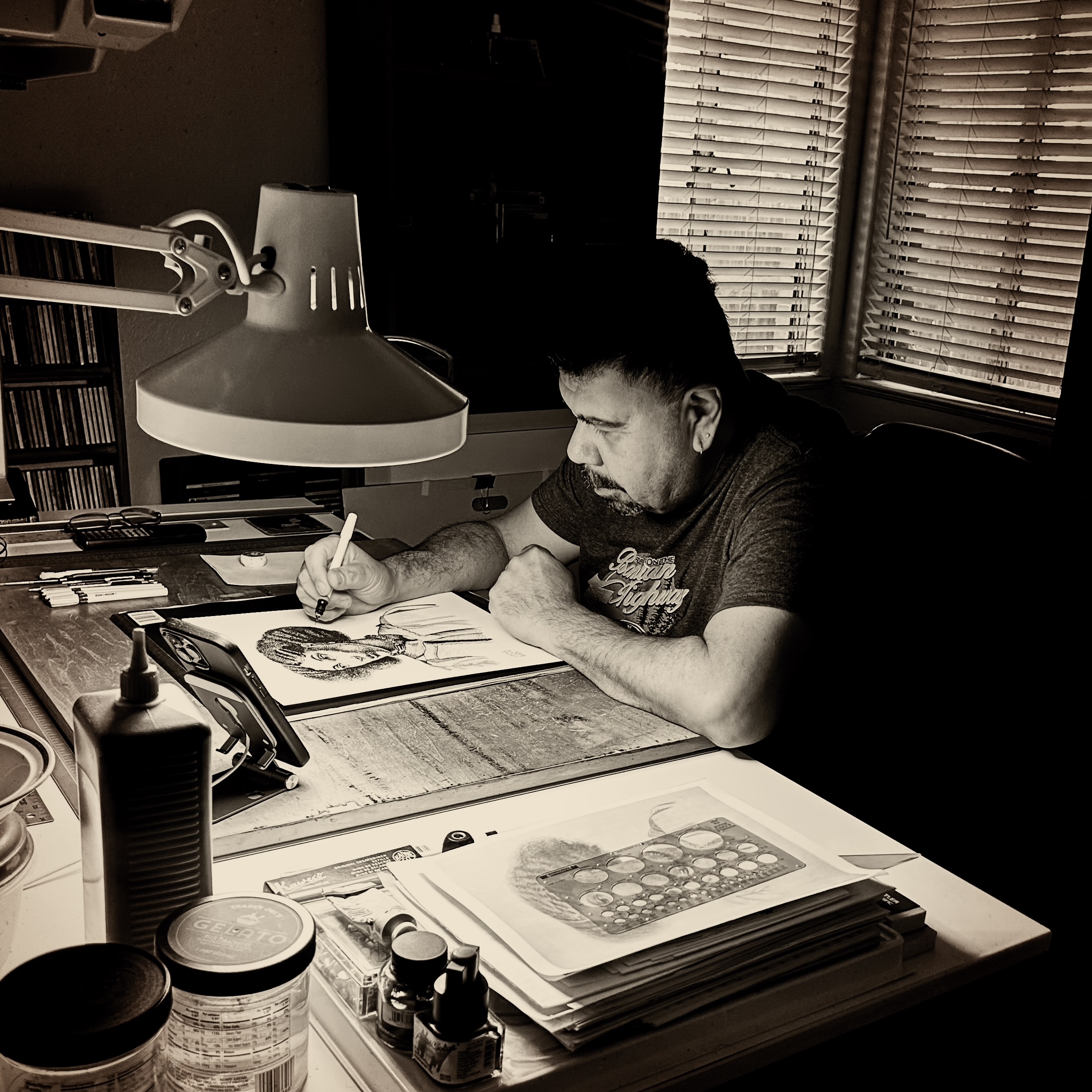
In the Studio, May 2025. Photograph by Allyce Castillo ©2025.

For more than four decades, my work has been shaped by the Pre-Raphaelites, particularly the art of Edward Burne-Jones and the broader Symbolist and fin de siècle traditions. The essay below, published in the Summer 2025 issue of The PRS Review as the inaugural entry in the series In an Artist’s Studio, outlines the development of that influence across my artistic life.

In it, I trace the trajectory from my early encounters with the movement to my contemporary practice as a draughtsman working consciously within — and extending — this tradition. I offer it here as a concise record of the evolution that brought me to my present aesthetic and the principles that continue to guide my work.

In 1982, when I was sixteen, I was an aspiring young artist living in California’s flat, sun-baked, agriculturally dense Central Valley, the most unlikely place to fall in love with the Pre-Raphaelites. It was there that I discovered the illustration monograph, The Studio that chronicled the formation of the famed New York City collective made up of fantasists Jeffery Catherine Jones, Michael William Kaluta, Barry Windsor-Smith, and Bernie Wrightson, which led to my profound interest in The Pre-Raphaelites. In his chapter, artist Barry Windsor-Smith spoke of the Pre-Raphaelite Brotherhood, citing Dante Gabriel Rossetti, Edward Burne-Jones, JW Waterhouse, and Frederick Leighton as key influences on his work. Windsor-Smith’s Pre-Raphaelite-inspired style was new to me; it proved to be a sign in the road that galvanized me to seek out and learn more about the names he mentioned.
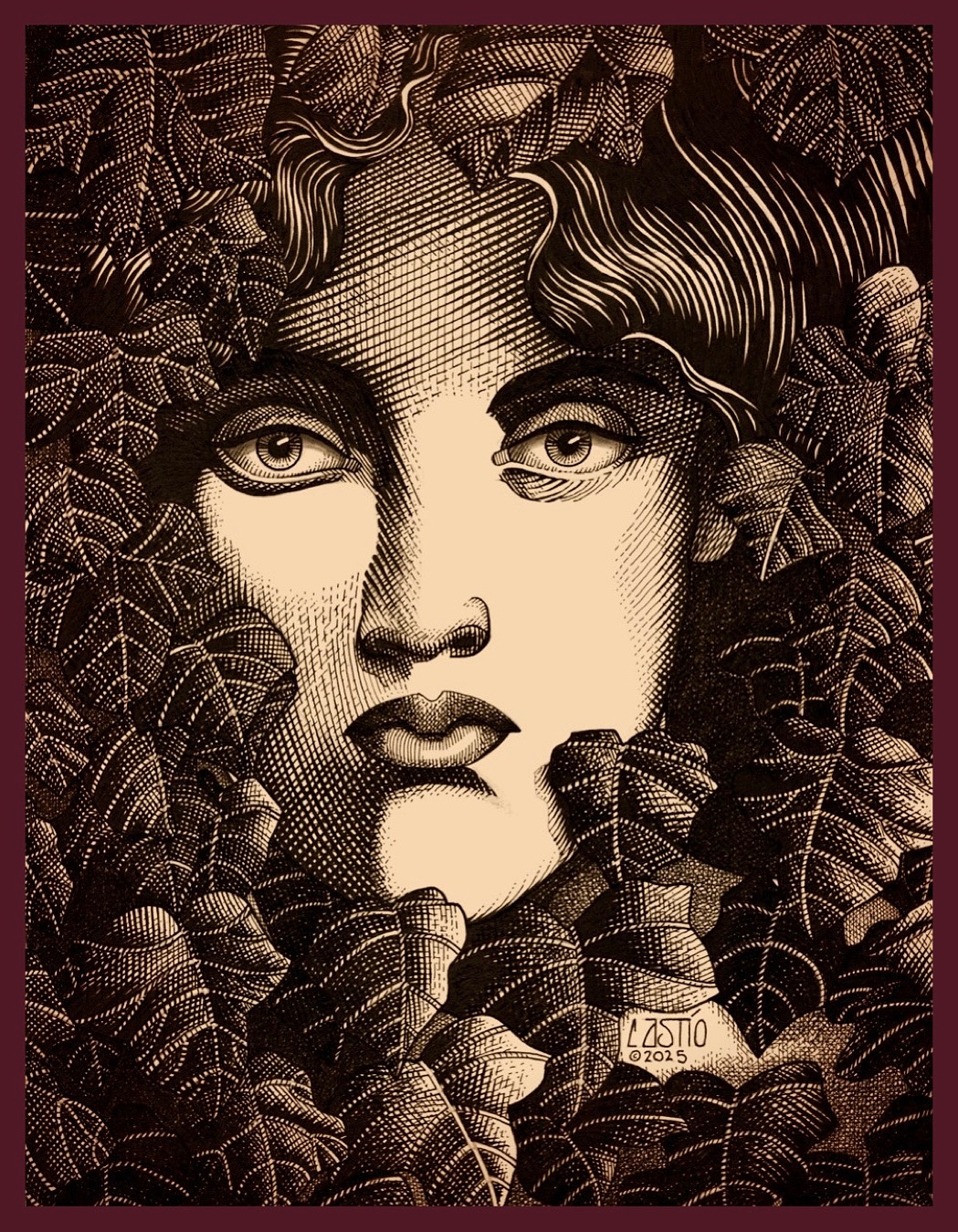
Mystery

Soon after, I discovered Christopher Wood’s seminal book The Pre-Raphaelites. That oversized tome continued the evolution that began with  The Studio. At a glance, the image on its cover, Burne-Jones’s The Mirror of Venus, conveyed what was artistically possible and a direction; it also led me further down the path of fine art inspired by the Pre-Raphaelite Brotherhood.

Over the ensuing years, I continued to improve my work, graduated from art school, and began working professionally. During that time, I, like many artists, spent energy attempting to find “my style.” As always, the Pre-Raphaelites remained in the background, gently haunting me. Even though I yearned to embrace their aesthetic, I held myself back because I knew my work needed to be world-class to be worthy of their legacy.

In 2000, I had the opportunity to travel to the UK to show menu designs to a friend who had plans to open a café bookstore in Central London. During my stay, I had the opportunity to visit Tate Britain and see the work of the Pre-Raphaelites. The impact was profound. Standing in front of Millais’s Ophelia, Waterhouse’s The Lady of Shalott, and Burne-Jones’s King Cophetua and the Beggar Maid was nothing short of a religious experience that deepened my longing to commit to the aesthetic I had loved for so long. 

In the years following, personal hurdles began to pile up—life circumstances, grief, and a myriad of other distractions. Due to this, I drifted from my work and considered giving up on the artistic vision I had nourished since adolescence. Still, I kept drawing, even though the work felt directionless. My skill had diminished, and my standards had slipped, but fierce resolve and perseverance kept me going. I knew things had to change, and after some genuine soul-searching, I found the answer I sought. To feel fulfilled, I had to return to where it all started: the Pre-Raphaelites, not as a nostalgic echo but as the foundation of my work. I began rebuilding, refining my skill, raising my standards, and constructing a personal ideology that would allow me to carry the Pre-Raphaelite tradition into the present while making it my own. 
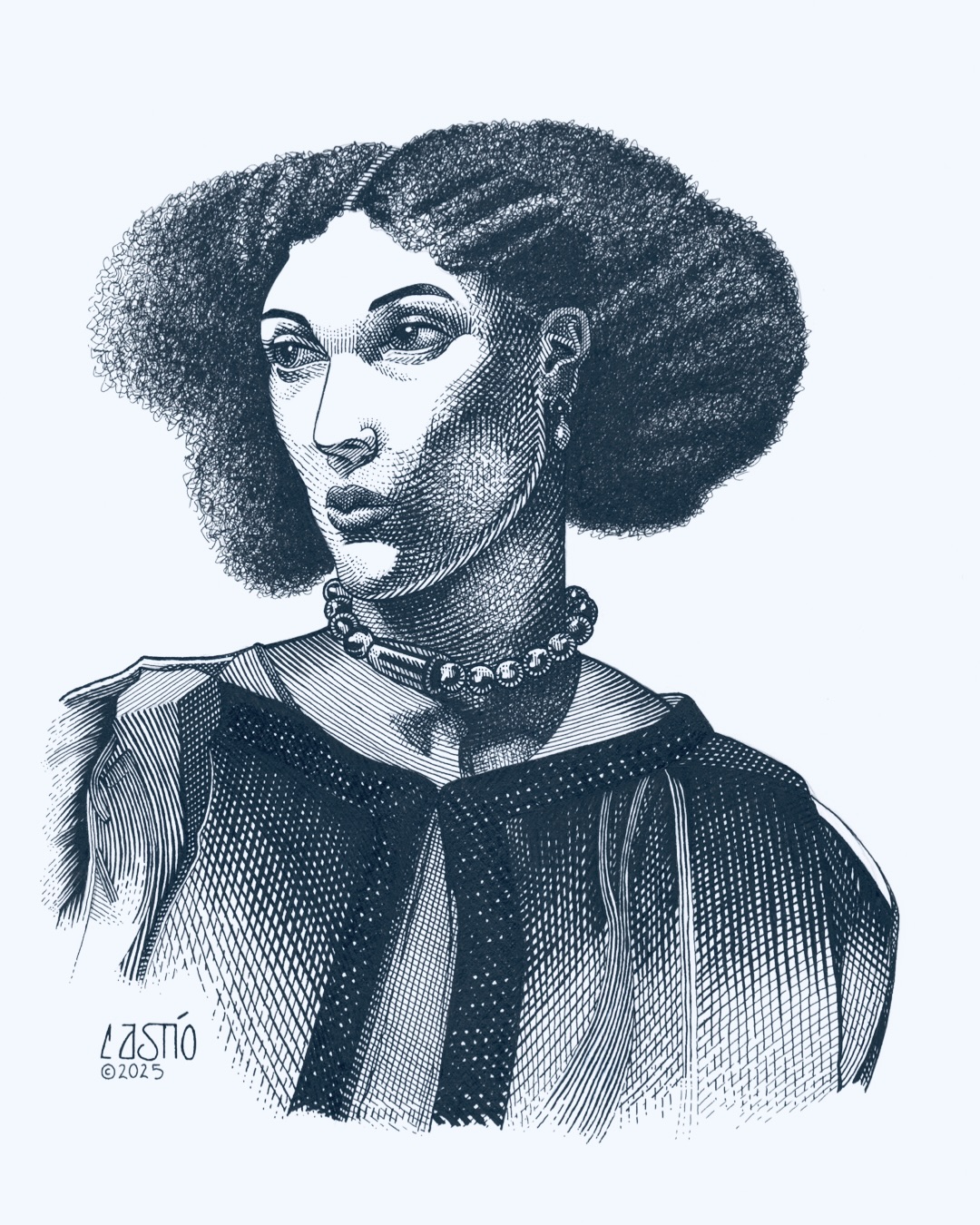
Fanny Eaton

Everything finally culminated in the summer of 2022 when I read Andrea Wolk Rager’s The Radical Vision of Edward Burne-Jones. Her brilliant reinterpretation of Burne-Jones’s oeuvre was the blueprint I had been seeking. Her scholarship illuminated Burne-Jones’s subtle but radical condemnations of environmental destruction, economic inequality, and empire. Her book gave me the intellectual and creative permission I had been waiting for. It proved that the Pre-Raphaelite aesthetic could be a vehicle for contemporary relevance, not just homage. The style I have embraced continues to evolve as I slowly incorporate the ideas and themes I’ve mentioned. My drawings, Mystery, and my portrait of Fanny Eaton, pictured in this article, reflect the two sides of the style I have embraced. In Mystery, you see the ethereal and dreamlike nature so prominent in the work of the PRB, and in my portrait of Fanny Eaton, you see diversity and a global point of view.

Burne-Jones has always felt like a kindred spirit. Like me, he was an only child born to humble beginnings and shaped by the presence of a single parent. He drew to survive, to understand, to transcend. Although his sense of design and draughtsmanship have been lifelong inspirations, his painted work has spoken even more profoundly to me. Works such as The Mirror of Venus and King Cophetua and the Beggar Maid resonated most with me⏤his ability to use beauty and allegory to condemn the status quo and imagination and visual lyricism to sweep you away to what he called “a land no one can define or remember, only desire.” Burne-Jones has taught me that beauty has the power to be both ornament and epiphany. That runs through everything I create now. 

This belief also informs my process. My new work always begins with an idea from something I’ve dreamed, imagined, read, listened to, or watched. Creating a new drawing starts in the pages of my sketchbook as a series of thumbnails that are transferred and developed on tracing paper, where I work through multiple layers until my composition feels right. Once I feel confident with my preliminary drawing, I transfer it to a sheet of 4-ply Bristol board. At this stage, I examine every detail with extreme precision. If something doesn’t feel right, I create separate studies or technique roughs until I resolve the issue.
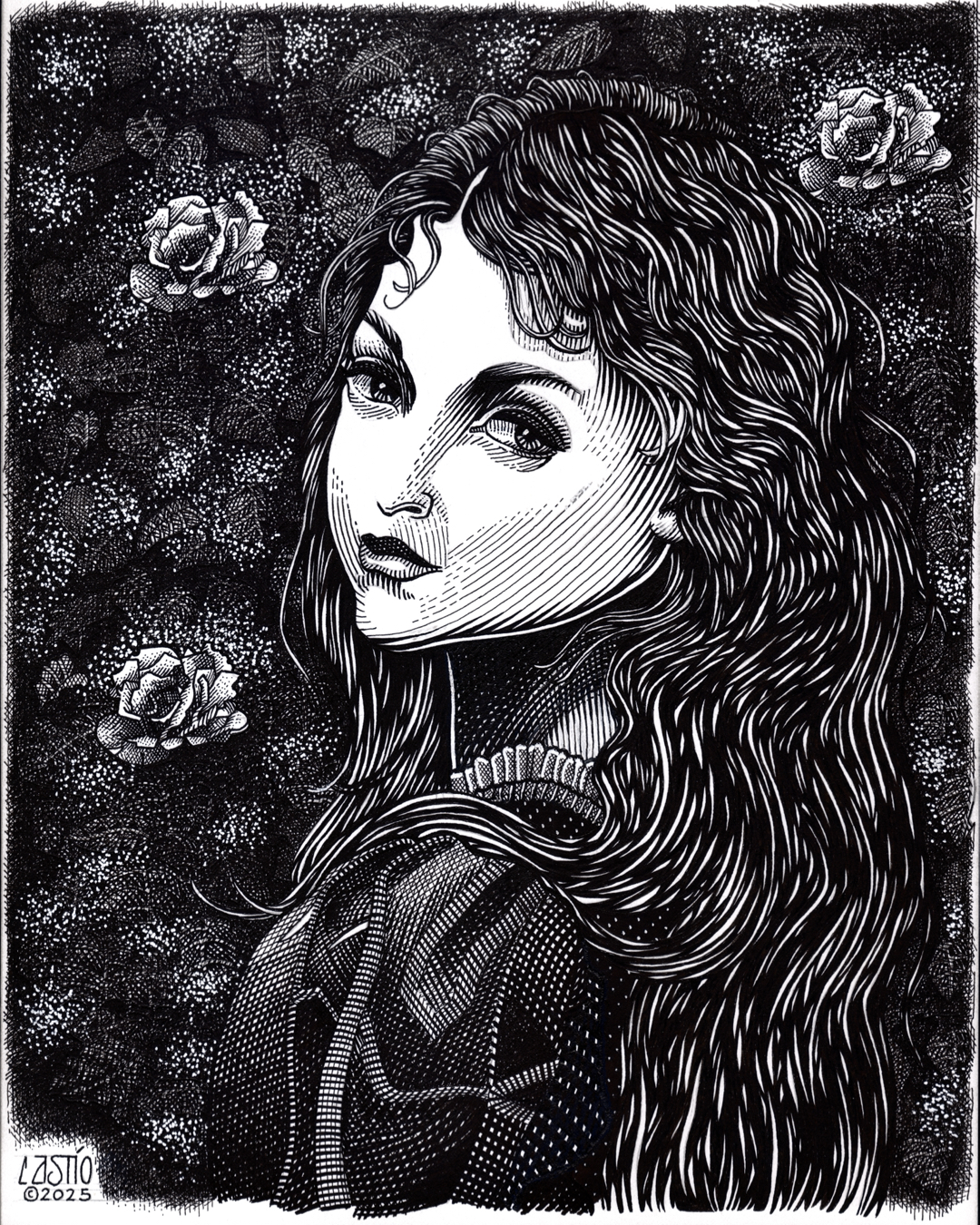
Entre Sombras II

Then begins the slow, tedious process of drawing my design in ink, using mostly Rapidograph technical pens, building linework with patience and precision. Light, shadow, and value gradually develop through dense crosshatching and layered textures. Depending on the complexity, a single drawing can take over 40 hours. Once finished, minor flaws get corrected with white gouache. My process is slow by design, reflecting the same belief held by the Pre-Raphaelites: that care and intention matter in making an image.

Through my work, I aim to extend the visual language of the Pre-Raphaelites into the present. I draw from the PRB and the designers and artists of the fin de siècle and filter their legacy through a contemporary lens focused on creating work with genuine intent and a higher purpose beyond commodification that celebrates global culture and spotlights social concerns. The prescience, deeper meaning, and radical nature of Burne-Jones’s work revealed in Dr. Rager’s book have provided me with a framework to follow that allows me to express my own global point of view and concerns regarding environmental destruction, income inequality, and social injustice. 
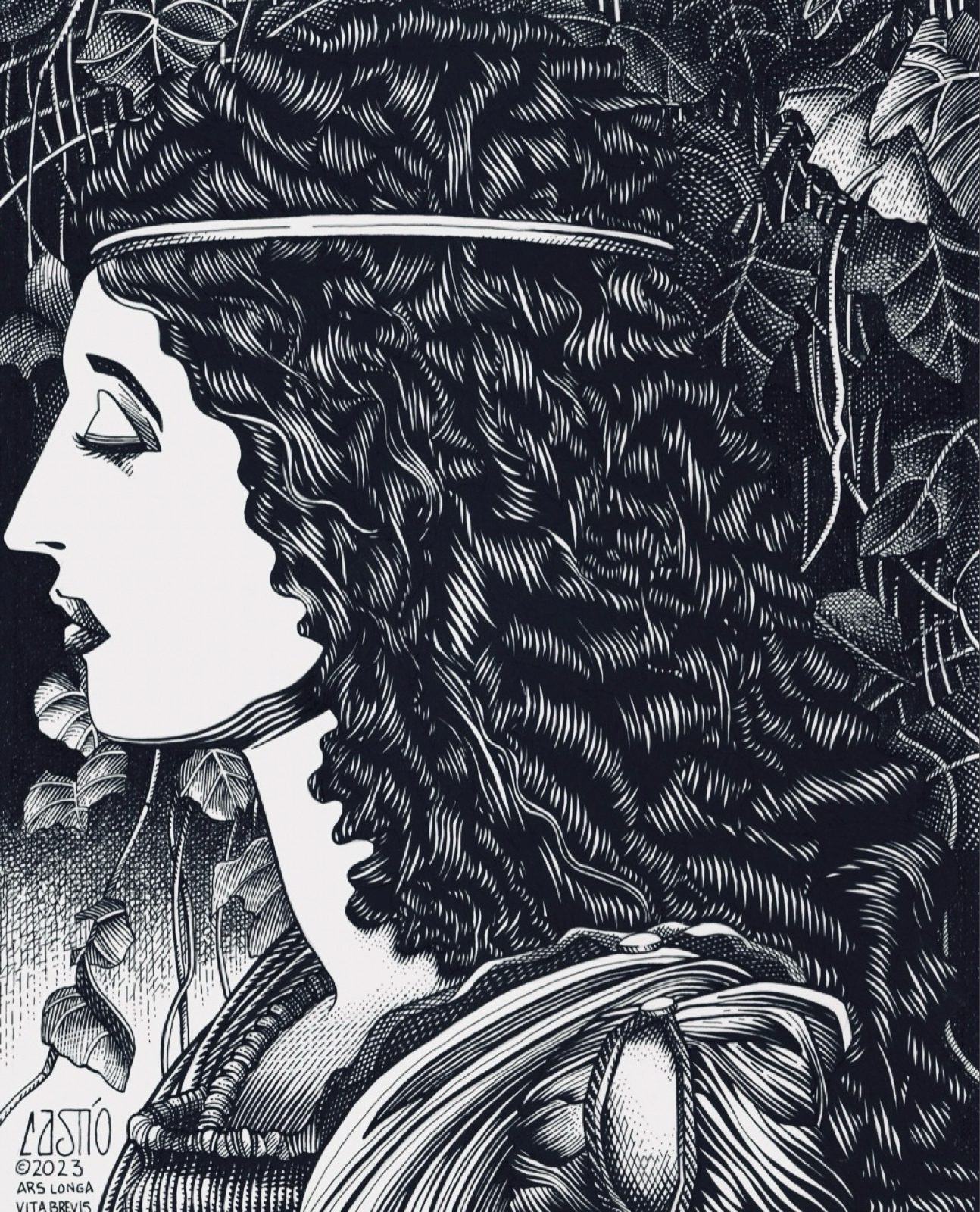
La Maja Soñadora

The Pre-Raphaelites presented me with an artistic vision that changed everything. The bar they set in my formative years has been a constant in my life, and Edward Burne-Jones’s work has continued to be a guiding light on the artistic road I am traveling. My work has undergone many changes since discovering the PRB; through years of trial and error, I have achieved a level of mastery in my draughtsmanship that has allowed me to confidently embrace an aesthetic inspired by the Pre-Raphaelites and the designers and artists of the fin de siècle. The merging of a PRB aesthetic and an ideology that reflects my worldview has finally allowed me to become the artist I envisioned when, at sixteen, I first encountered The Studio—and then, not long after, opened The Pre-Raphaelites by Christopher Wood and saw, perhaps for the first time, who I truly was.

Originally published in The PRS Review (Summer 2025) as part of In an Artist’s Studio, edited by Dr. Zaynub Zaman. Reproduced with gratitude to the Pre-Raphaelite Society.

For copies of the PRS Review and membership details, visit the Pre-Raphaelite Society
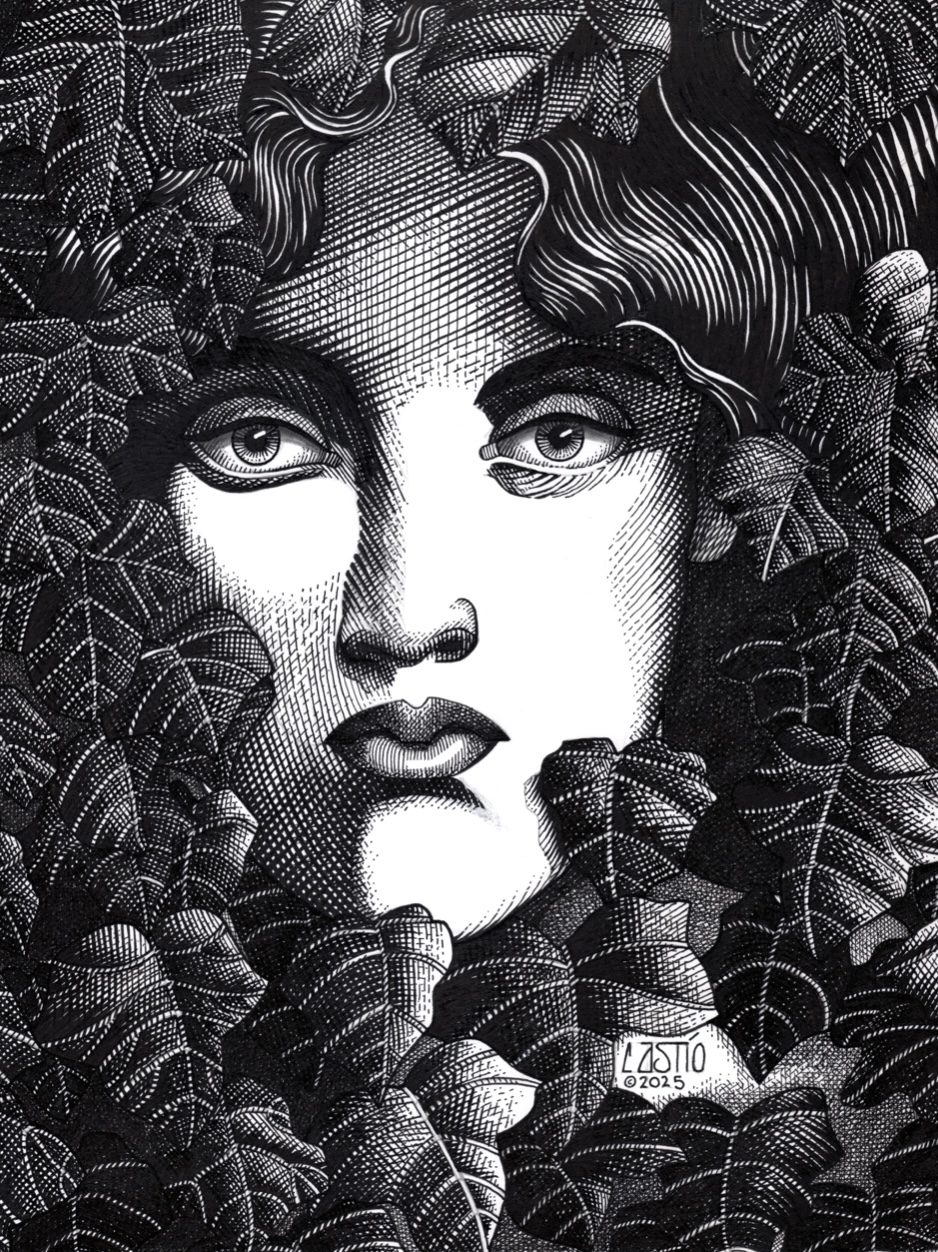
 

The Evolution of Mystery

Mystery. 2025. Pen and ink on paper. 9″x12″.

The creation of a new piece of work unfolds in ways most people never imagine. It’s nonlinear, unpredictable, and refuses to adhere to routine. This isn’t a recipe for paella, it’s the act of conjuring something from nothing.

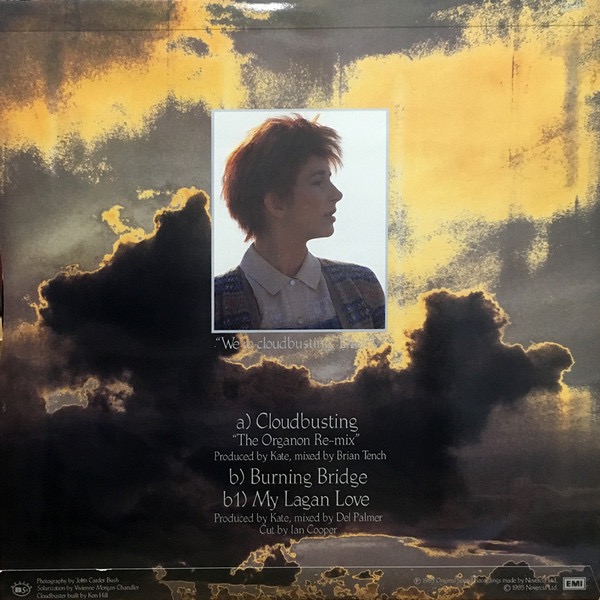
My Lagan Love from 1985 UK 12″ of Cloudbusting by Kate Bush.

In past blog posts, when I’ve written about creating new work, I’ve fallen back on the same worn-out playbook, offering a play-by-play of pencils, pens, and technique. That approach has never done a damn thing for anyone, let alone provided any real insight into my process. It’s been nothing more than a polished façade, a false account of what it truly means to create something from nothing.

The changes my work has undergone over the past few years make it impossible for me to present anything but the raw truth behind what I do. Speaking that truth is essential to where I am now and what I create. The creative process is messy, complex, and rarely linear; it’s not a fucking Disney movie.

My drawing Mystery began as a ball of frustration after the worst bout of creative stasis I’ve ever experienced. 2024 started as a long list of projects that would move me closer to my goals, but life had other plans. In the past, whenever I’ve experienced rough patches on my journey, I’ve always turned to music to get me through; it’s never let me down. In 2005, after losing my mom and my way, I reached out to Hounds of Love, London Calling, and Point of Entry for salvation. The sounds on those albums were a balm for my mind during the bleakest period of my life.

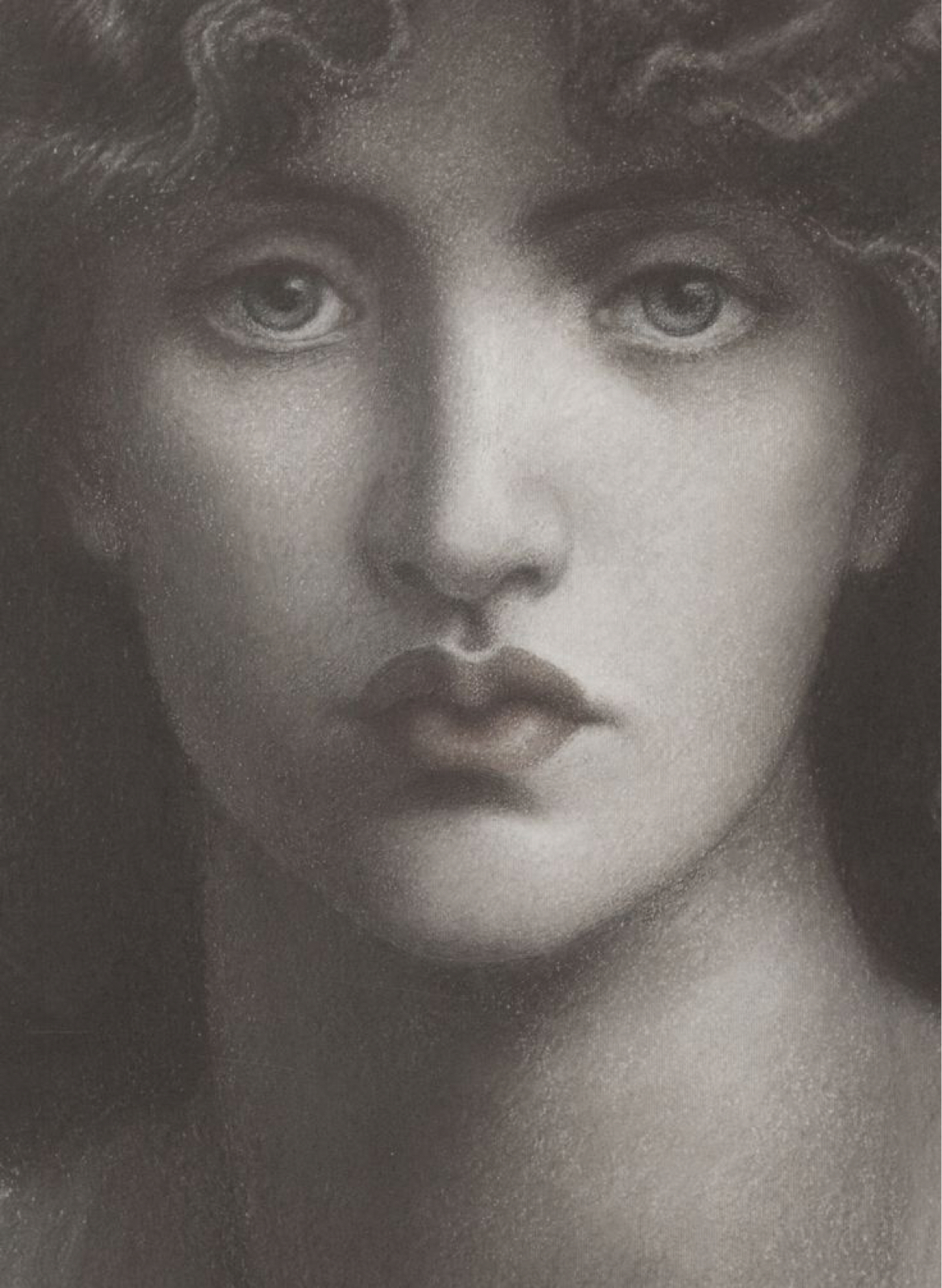
Dante Gabriel Rossetti’s haunting study of Jane for Astarte Syriaca.

This time, the rescue came quietly, almost by accident. One night, after weeks of aimless sketching and abandoned starts, I sat in my petite atelier listening to Kate Bush’s reinterpretation of the traditional Irish air My Lagan Love. Stark and unaccompanied, her magnificent voice rose like a prayer in a vast, empty cathedral. Its resonance and haunting stillness carried the same ethereal quality and mystery that had first drawn me to the Pre-Raphaelites decades ago. Not long after that moment, I came across I Can’t Sleep from Wang Chung’s 1982 debut album. Its enigmatic tone, paired with the solemn beauty of My Lagan Love, reminded me of what had fueled my fascination with the Pre-Raphaelites from the beginning: beautiful mystery.

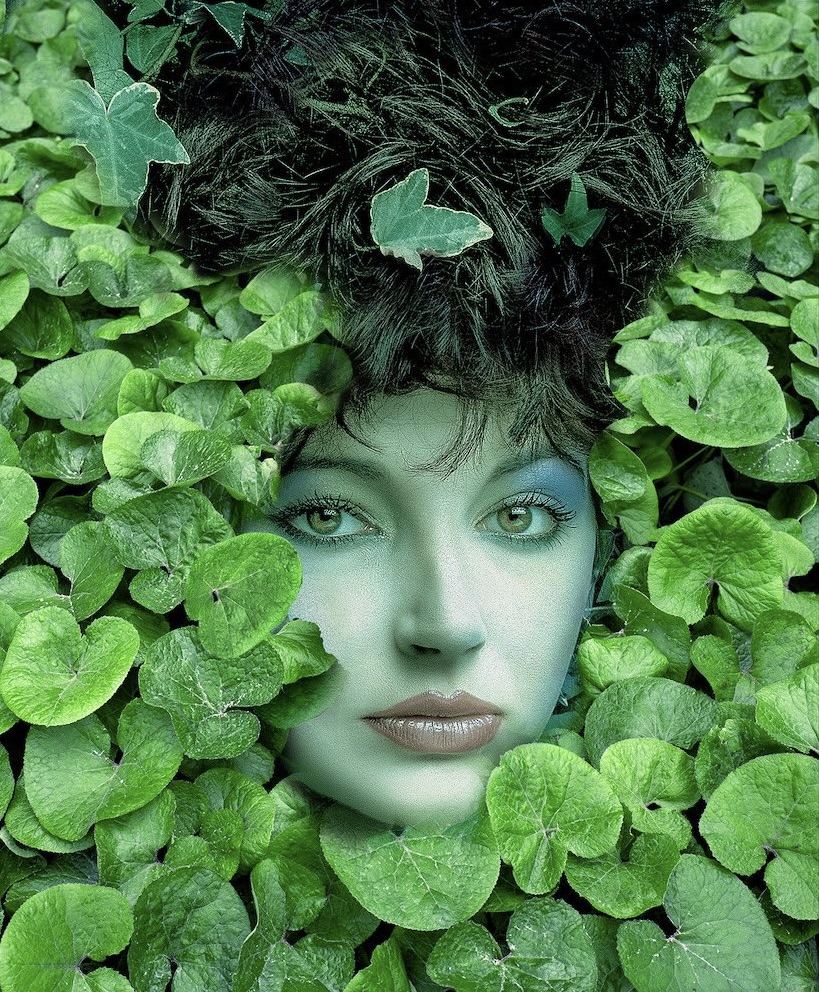
Alongside music, images play a vital role in sparking the creation of new work. In the case of Mystery, I recalled the sublime portraits of Jane Morris by Rossetti and a magnificent photograph by Clive Arrowsmith of Kate Bush–her face framed by leaves in a distinctly Pre-Raphaelite manner. Combined with the songs I’d been listening to, an image began to emerge, slowly, insistently. What followed was a long, deliberate stretch of hard graft: translating emotion and idea into form on paper.

Kate Bush at her most Pre-Raphaelite by Clive Arrowsmith. Photo ©2025 Clive Arrowsmith.

The creative stasis I endured in 2024 was unlike anything I’d ever experienced before. I’d weathered dry spells in the past, but never one so long and so sustained. Still, I’ve come to see that every pause, every obstacle, has its purpose. The path of artistic growth always comes at a price.

As Mystery began to take shape, every mark I made carried the weight of my desire to excel and create something undeniable, something that bore witness to the struggle that preceded it.

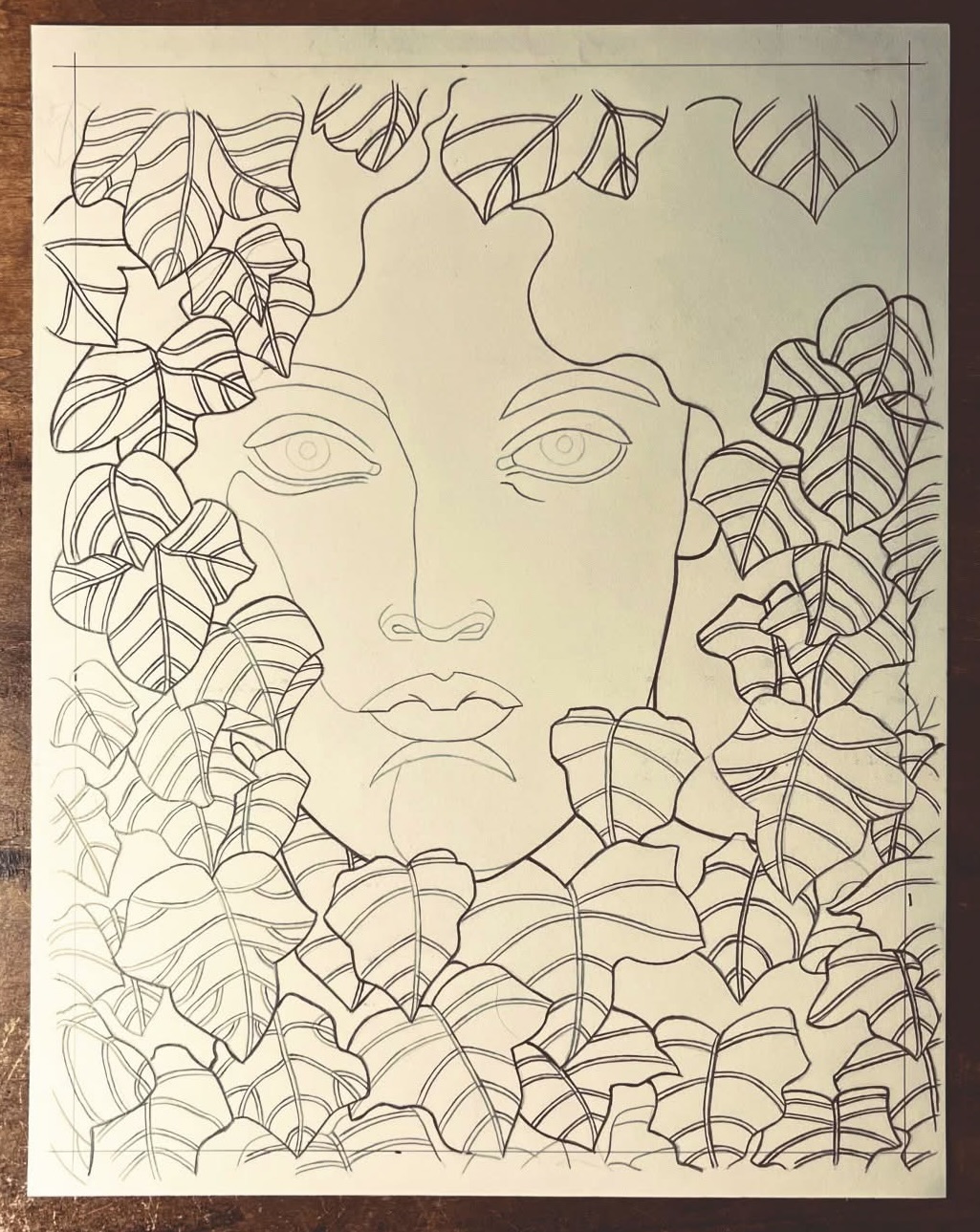
A clear idea, a balanced composition, and solid drawing are essential to any new image. There must always be rhythm as well as weight in what you put down. What has always resonated with me about the Pre-Raphaelites’ work is the brilliance of their draughtsmanship and the precision behind their iconic images. Everything they created, whether an oil on canvas or a design in pen and ink, began with sketches and studies in pencil. They worked out every facet. Their pictures were born of a deep, genuine love of drawing and painting, a truth reflected in every mark and brushstroke. Their draughtsmanship set the bar when I first discovered the Brotherhood at sixteen, and it remains the standard I hold myself to today. I will never compromise my standards.

Mystery in-progress pencil preliminary.

​Mystery is a chronicle of struggle and triumph, captured in exacting pen strokes and lush crosshatching. When I began the drawing, I had no idea what would emerge after the weeks of work required to bring my idea to life. Starting was a tentative step after a year of stasis, but as always, I found solace in the long, deliberate process of creation. The act of building form through a profusion of crosshatching and the feel of the pen nib etching ink into the surface of the paper has always carried a kind of therapeutic magic, capable of dissolving whatever hurdle stands in my way.

Whenever I complete a drawing, I’m always surprised by what I see when I finally step back. It’s one thing to sense the potential in an idea; it’s another to bring it fully to life. After weeks of work, I stepped away from the drawing table and looked hard at what I had made. My gut told me I had created something powerful. Maybe.

That intuition found its echo when my wife walked into the studio to see the finished piece. The look on her face said everything: “This is my favorite of all the newer, Pre-Raphaelite-inspired work you’ve done. “She isn’t one to mince words, so perhaps my instincts had been right all along. The moment that confirmed what we both felt came unexpectedly, weeks later, when Dr. Zaynub Zaman, editor of the Pre-Raphaelite Society’s journal, the PRS Review, emailed to offer me the opportunity to help inaugurate her new series, In an Artist’s Studio. To say I was gobsmacked would be an understatement. In an instant, Dr. Zaman validated years of effort and sacrifice and gave the voice I’d long been searching for new depth and resonance.


Pre-Raphaelite Society’s PRS Review subscriptions

Clive Arrowsmith Editions

Follow my Facebook artist page

The Big Sky


And if I only could

I’d make a deal with God

And I’d get him to swap our places

Be running  up that road

Be running  up that hill

Over the last few months, the music of one of my artist-heroes, Kate Bush, has been in the zeitgeist. Her song, Running Up That Hill (A Deal With God), from her classic album, Hounds Of Love, has had a massive resurgence and been introduced to a whole new generation of fans thanks to the show Stranger Things. 

     Kate and her brilliant work have been a part of my life for nearly forty years. It seems fitting that one of the artists I admire most is in the public eye now. I first discovered Kate in 1985 when Running Up That Hill was released. Its immediate impact piqued my interest, leading me to purchase her next release, The Whole Story, her greatest hits compilationwhich was nothing short of epiphanic. 

     Over the last few months, I have been somewhat absent from social media. That absence has been intentional. I have spent my time indulging in things that nourish me creatively, such as revisiting favorite albums, watching documentaries, and reading as much as possible. I have spent most of my time quietly working on pictures I have wanted to make for myself. I have zero interest in sharing what I have been doing on social media or with anyone. It’s up to me to share my efforts ― or not. The work I have been doing is solely for myself and no one else. The only goal that I have had during this time is to create work that matters to me. People notice when you do work whose only goal is to satisfy your artistic goals. Doing work solely to please myself is the only way possible for me. There’s no point in creating things that don’t matter to me or satisfy me. Ultimately, whatever I do has to fulfill me.  

     I have long admired and respected Kate Bush for this very reason. She’s done things her way from the beginning, and her work has been brilliant. If there’s one thing I’ve learned from Kate, it has always been to do things your way without compromise.

     Kate and her work have been a part of my personal soundtrack ever since my formative years in the 80s when I went from being a beginner with nothing but a burning desire to make art and loads of talent to an art student. First in Los Angeles at Otis-Parsons, then in San Francisco at The Academy Of Art College. My college years were a supernova of people, places, culture, and remarkable artistic growth. Throughout those life-changing years, Kate’s music continued to challenge and amaze me. The Whole Story introduced me to Celtic folk music, The Sensual World introduced me to Bulgarian singing, and The Red Shoes furthered my exposure to Celtic music while also exposing me to the Madagascan valiha. This incredible exposure happened alongside my artistic skill’s growth and refinement. 

     Eventually, all this led to where I find myself at this very moment. Last weekend, I decided to give my followers on Facebook and Instagram a sample of some of the work I’ve been doing over the past year, and the response was fantastic. Between likes, comments, and reshares, total engagements were just over 200. It was clear that people were responding so strongly because they could see the decades of sweat and effort that I’ve dedicated to my work. They saw something genuine, and they responded. I couldn’t ask for more.

     My picture of Kate for this week’s post is taken directly from my sketchbook. Her song, The Big Sky, from Hounds Of Love, is the inspiration. I have always loved the song’s meteorological-based lyrics ― cloudy, overcast days are magical and forever inspiring. Best of all is the song’s title; it best reflects my ambition.

I’m looking at the big sky.